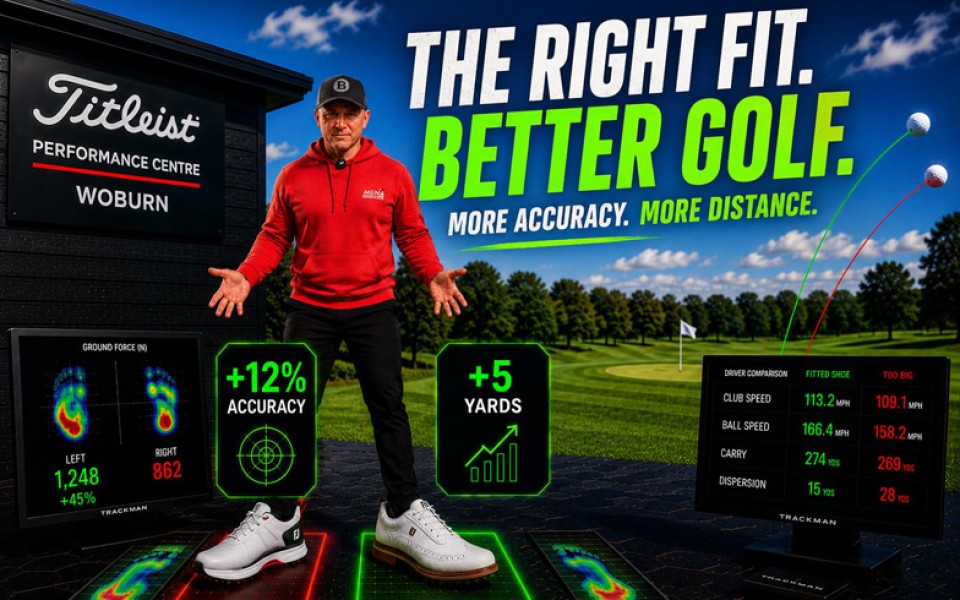
Before you spend another £600 chasing more distance with a new driver, there might be a far cheaper way to improve your golf. A visit to FootJoy’s Performance Centre at Woburn Golf Club revealed why the shoes on your feet could have a bigger influence on power, consistency and even injury prevention than most golfers realise.
Every golfer wants the same thing: a few extra yards off the tee, a little more accuracy and more consistency under pressure. The search for those marginal gains usually starts with the golf bag. We convince ourselves the latest driver promises another 10 yards, or a new set of irons will suddenly tighten our dispersion. The real answer, of course, is usually less glamorous. Better technique, a little more flexibility and perhaps spending a bit more time in the gym than browsing the equipment aisle. But there is one piece of equipment that almost every amateur overlooks: their golf shoes.
When was the last time you were actually fitted for a pair? Not simply trying on your usual size in the pro shop, but having your feet professionally measured, your swing analysed and your footwear matched to the way you generate power. If you’re like me, the answer is probably never. For the best part of 30 years I’ve simply bought whatever size I thought felt comfortable. If my previous pair were a UK 9, I’d buy another UK 9. Job done, or so I thought.
A Day at Woburn
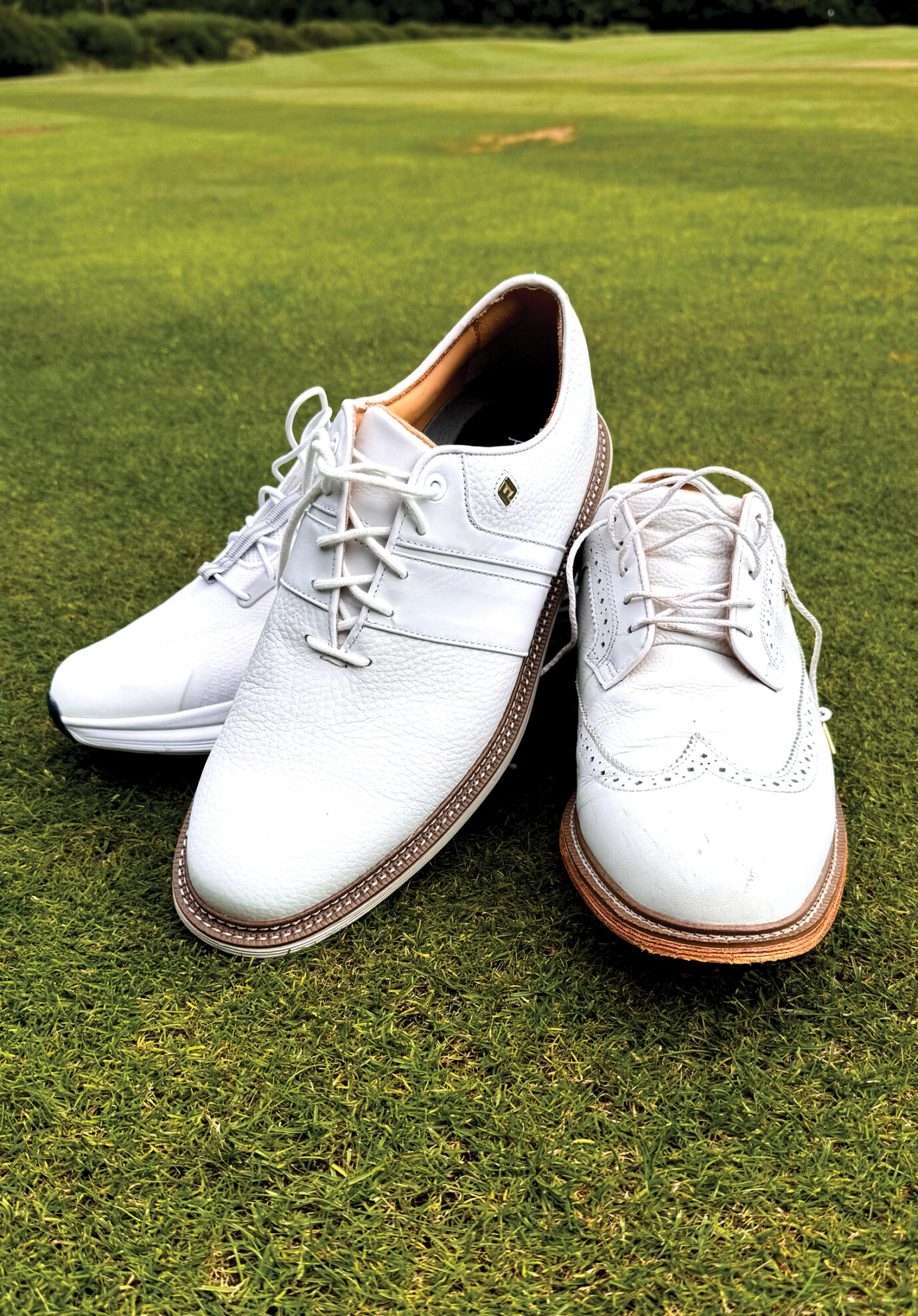
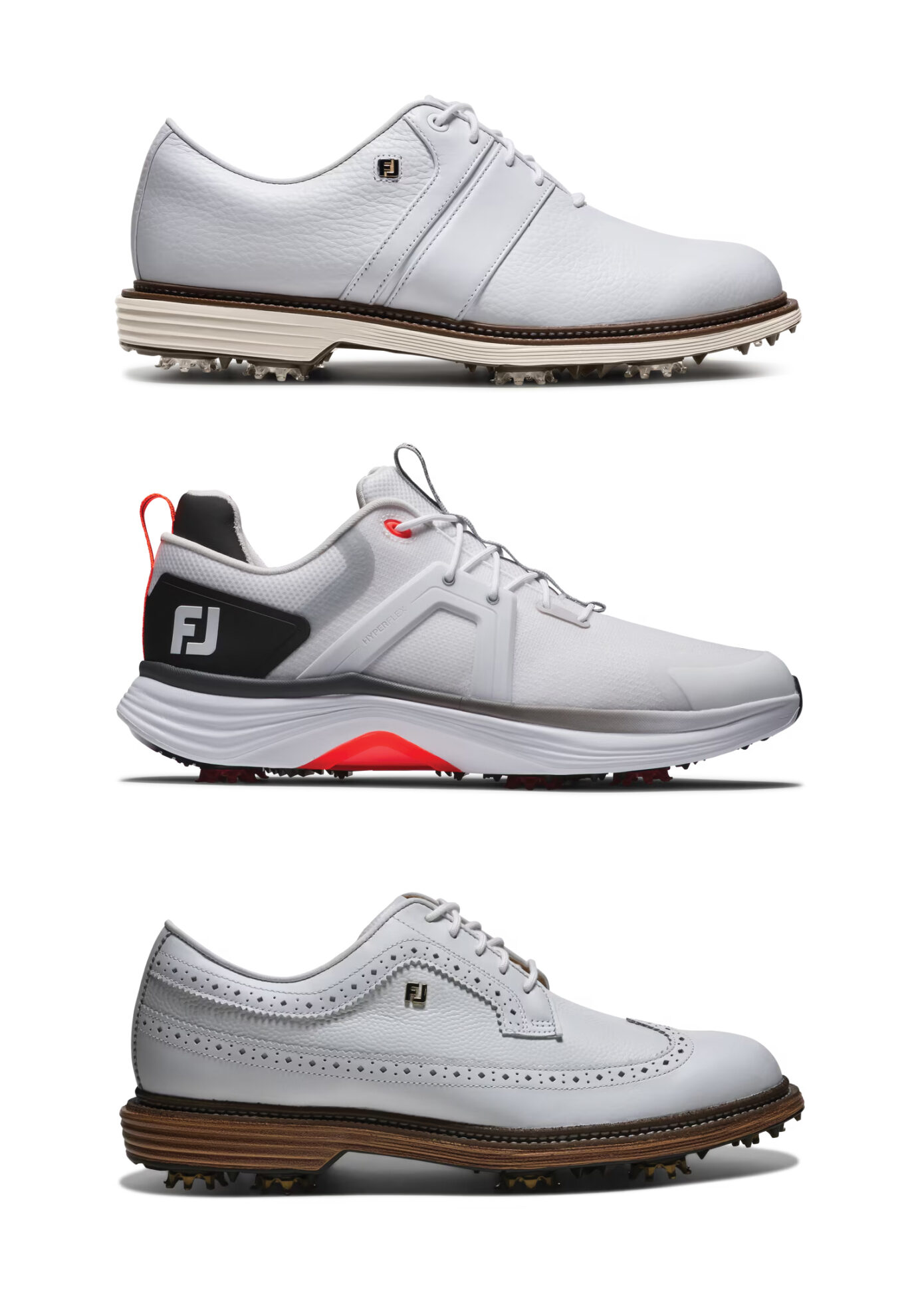
When FootJoy invited me to its Performance Centre for a professional fitting, I wasn’t expecting any great revelations. I’ve worn FootJoy shoes almost exclusively for the last five years, my current rotation consisting of the HyperFlex and the Premiere Series Marquis. The HyperFlex have become my everyday golf shoe, exceptionally comfortable during long summer rounds when you’re walking across baked fairways for four or five hours. The Premiere Marquis were different. They were the shoes I’d save for competitions, feeling firmer and giving me the confidence that my feet stayed connected to the ground. What I couldn’t explain was why. As it turns out, there was far more science behind that feeling than I’d ever imagined.
The Scan That Changed Everything
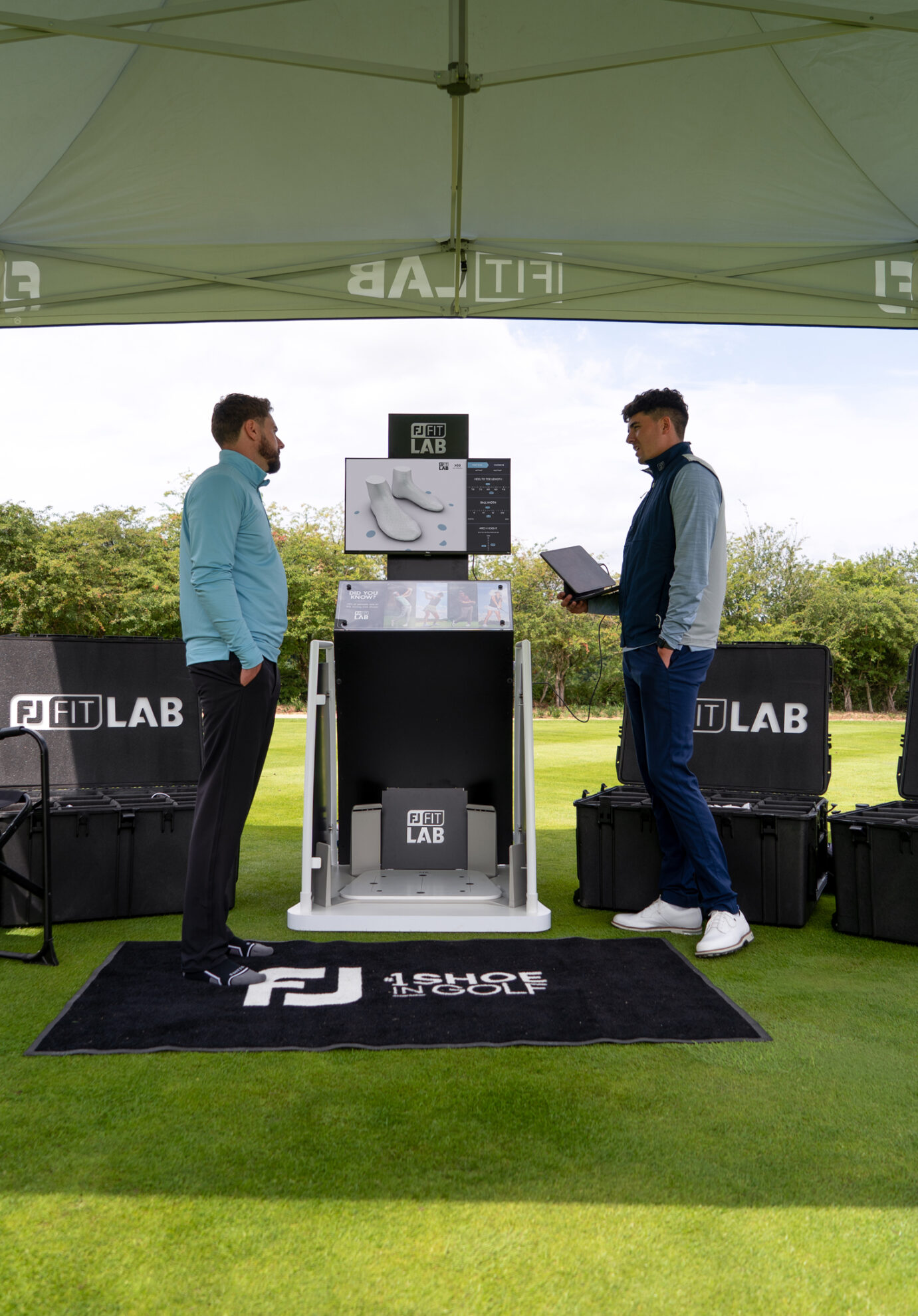
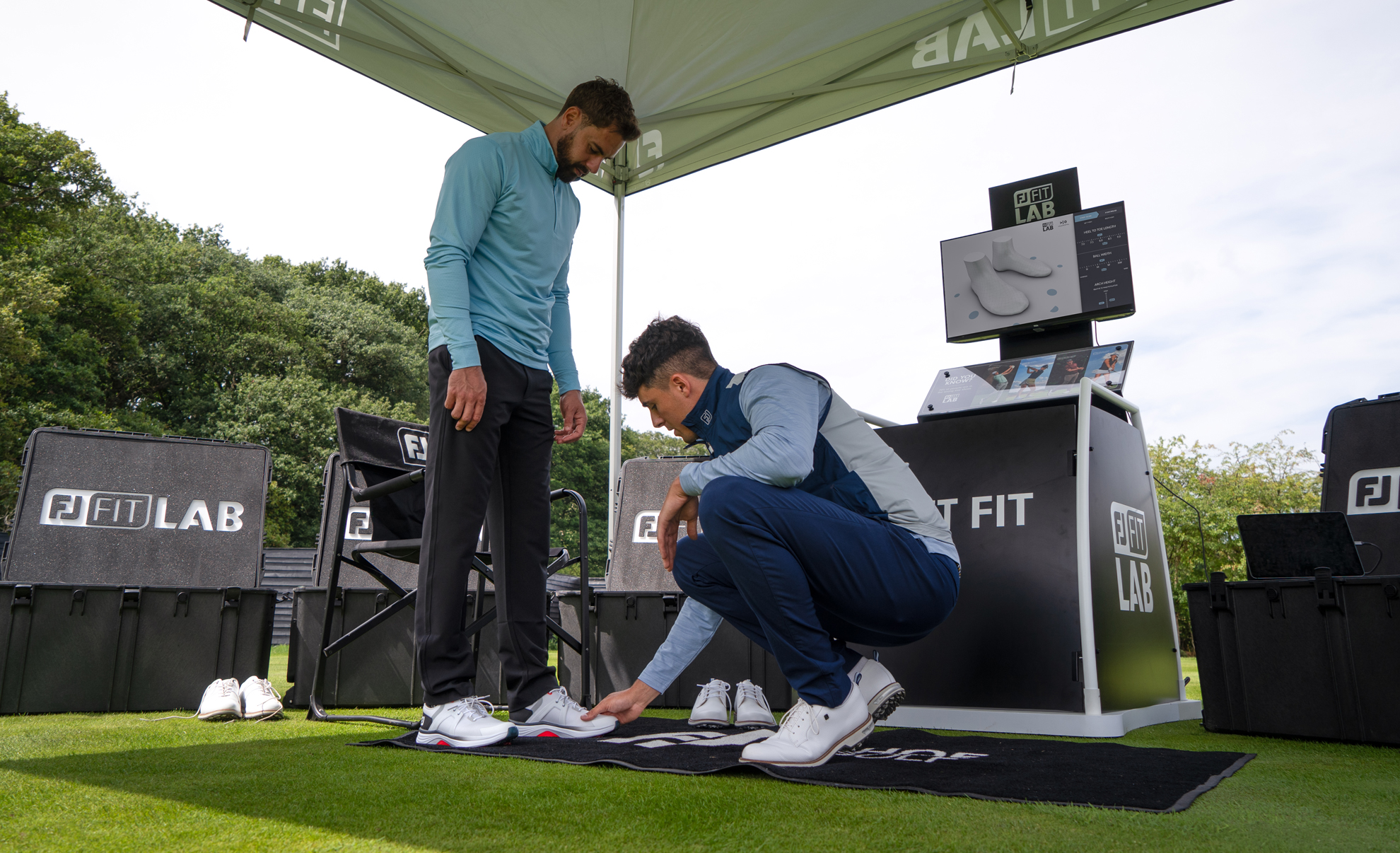
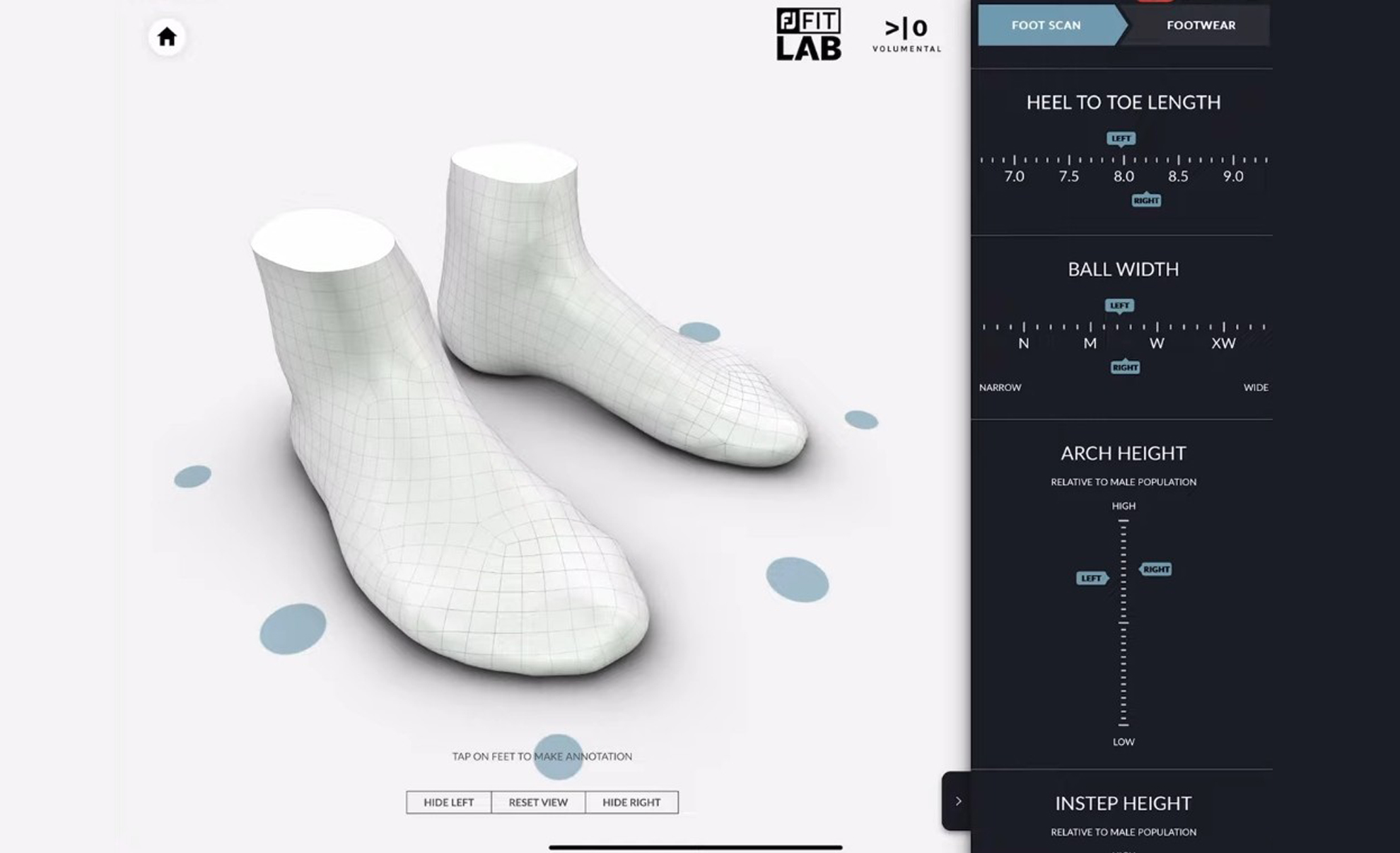
The fitting begins with a foot scan. Within seconds, the system had measured not just the length of each foot but its width, overall volume and, most importantly, my arch profile. Then came the first surprise. Like most people, my feet aren’t identical. One foot is slightly longer, while the other is noticeably wider. Suddenly years of compromise made perfect sense. I’d always bought shoes half a size larger because I hated feeling pressure along the outside of my foot. The extra room solved that problem, but at the expense of creating another: my foot had enough space to move around inside the shoe. It wasn’t much, but in golf “not much” often makes all the difference.
The second revelation concerned my arches. I have relatively flat feet, meaning several shoe designs simply aren’t ideal for me. Certain lacing systems couldn’t tighten sufficiently across the top of my foot, leaving small pockets of movement around the instep. It also explained something that had frustrated me for years: every few holes I’d find myself bending down to tighten my laces again. I always blamed the laces, but in reality I was wearing the wrong shoe.
You’re Probably Wearing the Wrong Size Too
If that sounds familiar, you’re not alone. FootJoy’s fitting statistics are genuinely eye-opening. During 279 fitting events throughout 2025, the company assessed 2,576 golfers. The results? Nearly 64 per cent were wearing the wrong shoe size, and 27 per cent required a fitting outside the standard medium width. Almost two out of every three golfers are unknowingly playing in shoes that don’t fit properly.
It’s hardly surprising. Most of us buy golf shoes exactly as we buy trainers: we remember the size from our previous pair, try them on while standing still, walk across the carpet and decide they feel comfortable. Except golf isn’t walking around a shoe shop. It’s four hours of constantly loading, twisting and driving against the ground while trying to swing a club at over 100mph. Comfort matters, but proper fit matters even more.
Why Your Feet Are Your Swing’s Foundation
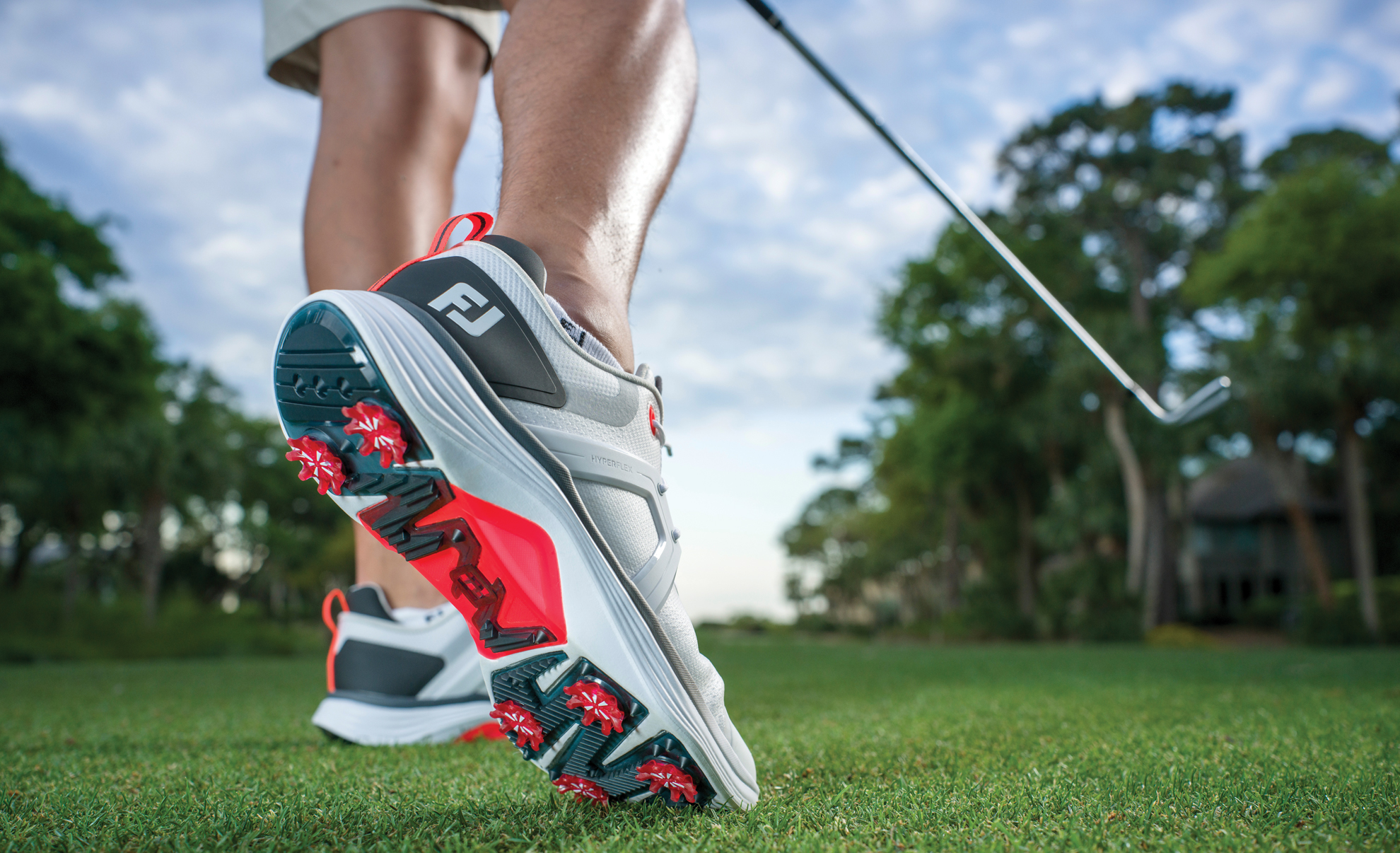
Over the last decade we’ve heard coaches constantly talking about “using the ground.” But what does it actually mean? Every golf swing starts with your feet. Before the club moves away from the ball, before your hips rotate and before your shoulders unwind, your feet are already interacting with the ground. Sports scientists refer to this as Ground Reaction Force. Every time you push into the ground, the ground pushes back, and that energy travels through your ankles, knees, hips and torso before finally reaching the clubhead. The more efficiently you transfer that force, the more potential there is to increase clubhead speed without swinging harder.
The problem comes when your feet move inside your shoes. Even tiny amounts of movement reduce stability. Instead of pushing directly into the ground, part of that force is lost as your foot shifts. It may only be a few millimetres, but those few millimetres are enough to influence balance, sequencing and timing.
As Gareth Benson, PGA Professional and GASP Systems Specialist, explains: “We only have two key kinetics, feet to the ground and hands to the club. Correct fitting is key because lateral, vertical and anterior/posterior forces are fundamental. We’re trying to generate maximum torque, which is effectively your golf swing superpower. FootJoy’s programme has found almost 65 per cent of golfers are wearing the wrong size shoe. The stress placed on the feet is massively underestimated, and we often lose significant forces because the feet are sliding inside the shoe. That influences both the sequence and timing of the golf swing.”
Putting the Theory to the Test
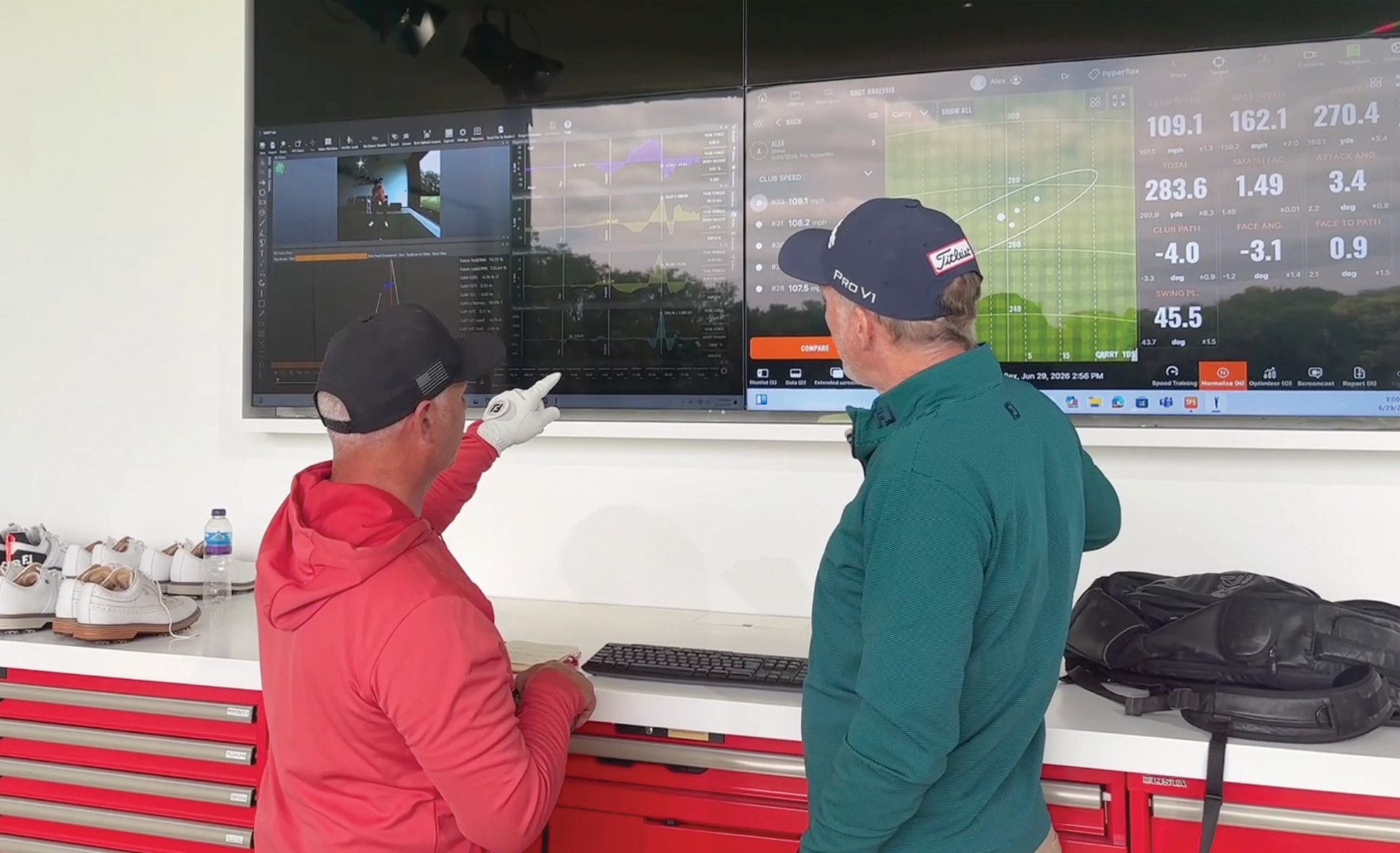
Once we’d narrowed the choice to three suitable models, it was time to let the technology decide. Every swing was measured using TrackMan alongside force and pressure plates that monitored exactly how my feet interacted with the ground. The technology records far more than clubhead speed. It measures how pressure moves between your feet, how effectively you push vertically into the ground, how much rotational force you create and whether you’re maintaining a stable platform or leaking energy through unnecessary movement. Tiny differences that were impossible to feel with the naked eye suddenly became obvious in the data.
My Benchmark
We started with my current competition shoe, the Premiere Series Marquis in a UK 9 Wide. My normal clubhead speed settled comfortably between 108 and 109mph, with solid ball striking and consistent dispersion. The interesting part came when I tried to find another gear. As I pushed harder, my timing became less reliable and my familiar miss appeared, the ball drifting out to the right. Even during the speed challenge, I struggled to get much beyond 111mph while maintaining control. It wasn’t a huge flaw, but it was a pattern.
HyperFlex, Brilliant Comfort
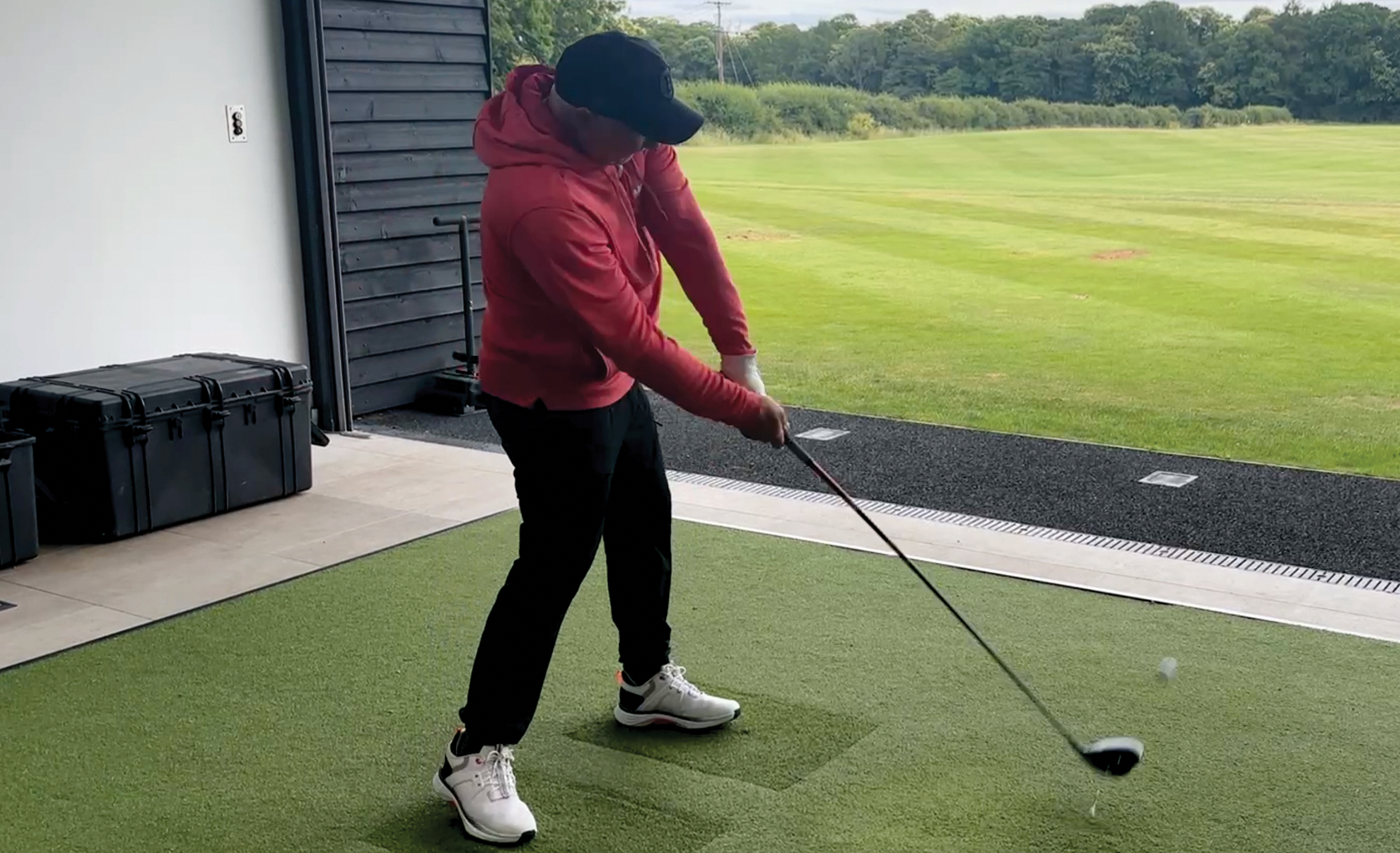
Next came the HyperFlex, a shoe I’ve always loved for its comfort. Walking golfers will appreciate how forgiving it feels underfoot. However, after half a dozen drives I could just sense my foot moving ever so slightly inside the shoe. Not enough to make me think it didn’t fit, just enough for me to stop trusting it completely. At 5ft 8in, I don’t generate speed through brute strength; my power comes from creating strong vertical forces and using the ground efficiently. If I lose that connection, even fractionally, I instinctively become more cautious through impact. The numbers agreed, with clubhead speed hovering around 108mph. The HyperFlex remained outstandingly comfortable; it simply wasn’t the perfect shoe for my foot.
The Surprise Performer
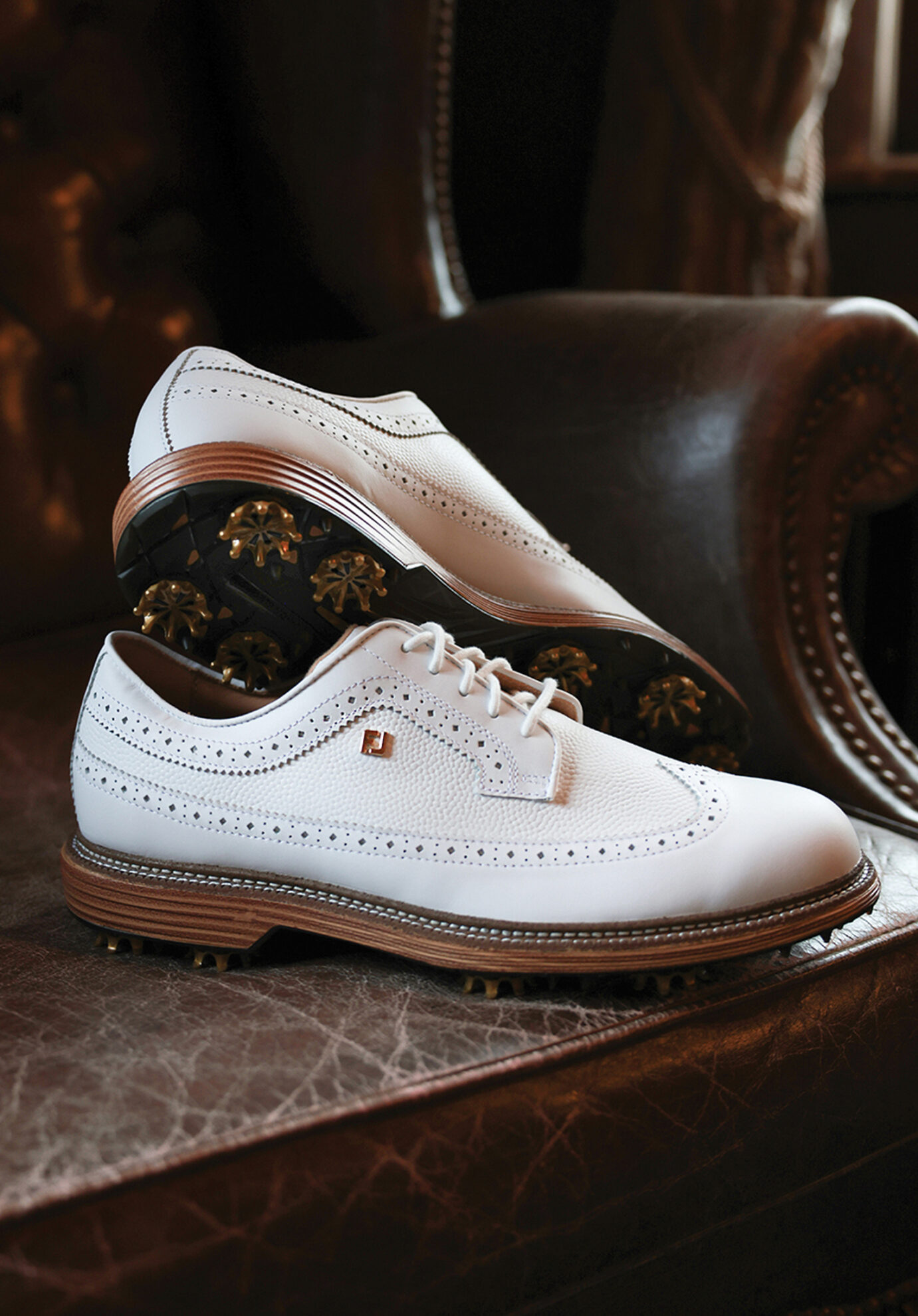
Then came the shoe I hadn’t expected to choose: the Premiere Series Packard. Straight away it felt different. The lacing configuration suited my flatter arches perfectly, securing my foot across the instep. Instead of relying purely on the laces, the shoe seemed to wrap around my foot more naturally. Despite being at the end of a long fitting session, my clubhead speed immediately increased by around 1.5mph. When asked to swing flat out, I stayed completely connected to the ground, stable enough to simply keep accelerating. The result was a clubhead speed of 112mph, and the big push didn’t bring my usual miss into play. The drives stayed on line. That confidence to commit fully through impact was worth every bit as much as the extra speed.
What the Tour Professionals Say
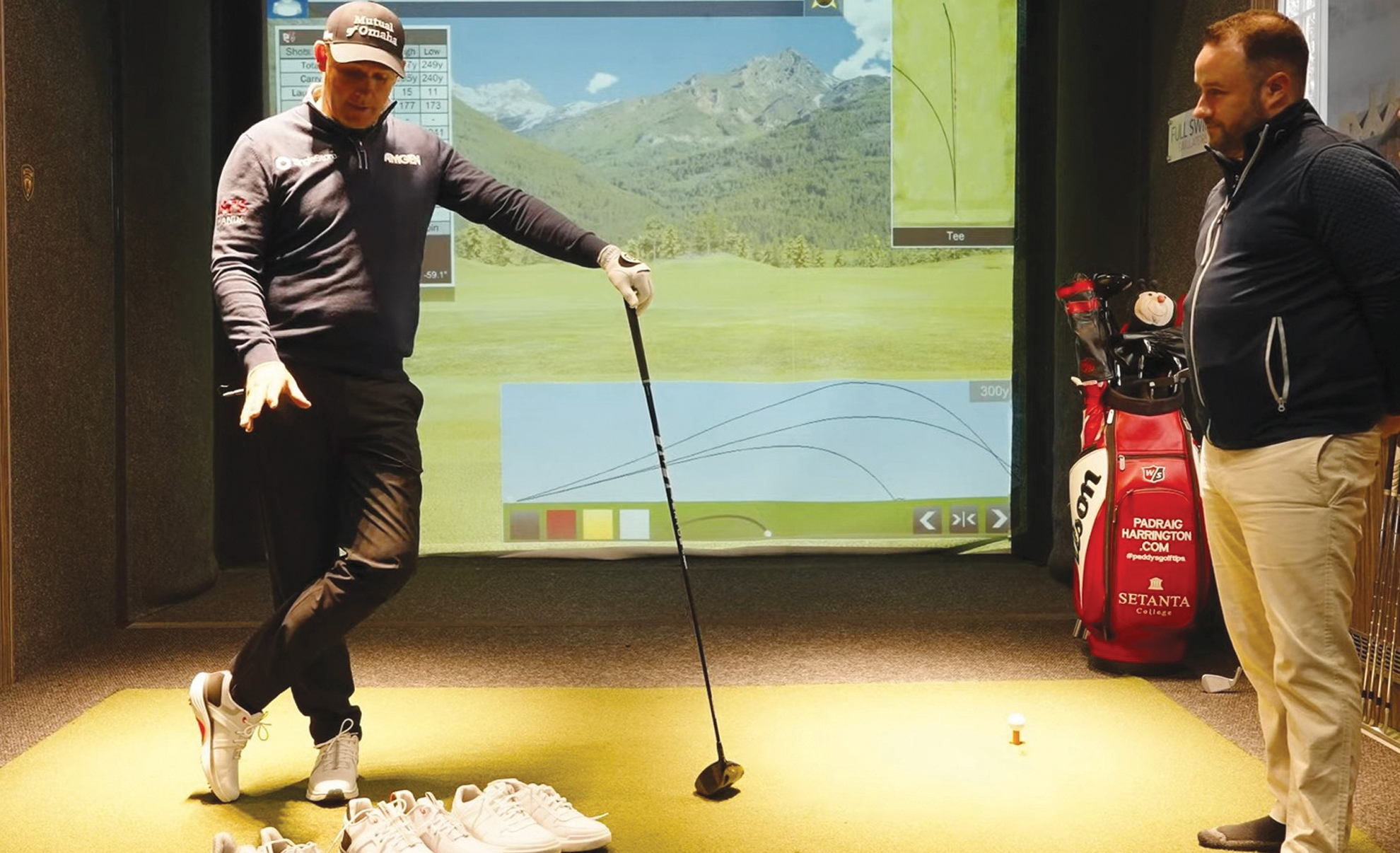
It was reassuring to discover my experience wasn’t unique. Major champion Pádraig Harrington has spoken openly about the difference properly fitted golf shoes make. “I have tested playing in a trainer-like golf shoe before and found my feet generally worked pretty well when hitting shots indoors,” he explains. “The problem was when I tried to add speed and power outside on the grass. I kept slipping and completely lost my confidence.”
It’s Not Just About Distance
Performance might be the headline, but there’s another compelling reason to pay attention to your shoes: injury prevention. The average golfer walks between six and eight miles during a round, taking 12,000 to 15,000 steps. Multiply that across a season and your feet absorb millions of impacts. If your shoes are too long, too narrow or lacking support, those stresses travel through your ankles, knees, hips and lower back. No shoe can prevent injury on its own, but footwear that supports your natural foot shape and reduces unnecessary movement can lessen fatigue over four or five hours on the course.
The Bigger Picture
The most surprising thing I took away from Woburn wasn’t that one model suited me better than another. It was how personal the fitting process really is. I’d assumed the newest shoe would automatically be the best. It wasn’t. Nor was the shoe I’d already owned. The winning shoe was simply the one that matched my feet. Golfers spend hours being custom fitted for drivers, irons and putters, yet many still walk into a shop, ask for “a size nine” and hope for the best.
Verdict
I arrived at Woburn expecting to confirm what I already believed about golf shoes. Instead, I left questioning why I’d never been fitted before. Did I suddenly gain 20 yards? Of course not. What I did gain was more valuable: a stronger connection with the ground, greater confidence to commit to aggressive swings and a measurable increase in clubhead speed without swinging harder. An honest gain of around 1.5mph won’t grab headlines like the latest £600 driver, but it’s a genuine improvement achieved without changing my swing. The biggest lesson wasn’t that everyone should buy the same shoe I did. It was that every golfer should know what shoe actually fits them.