
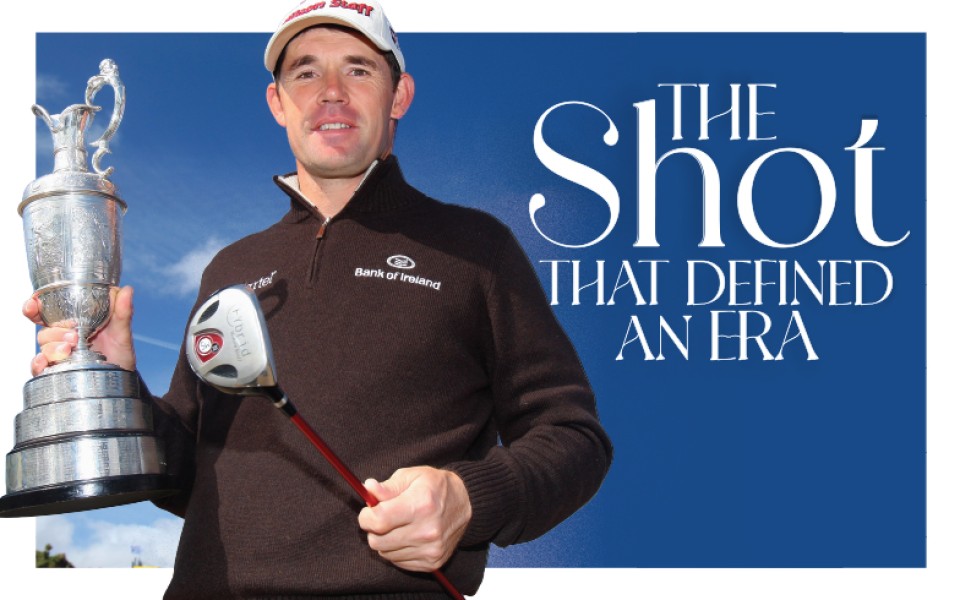
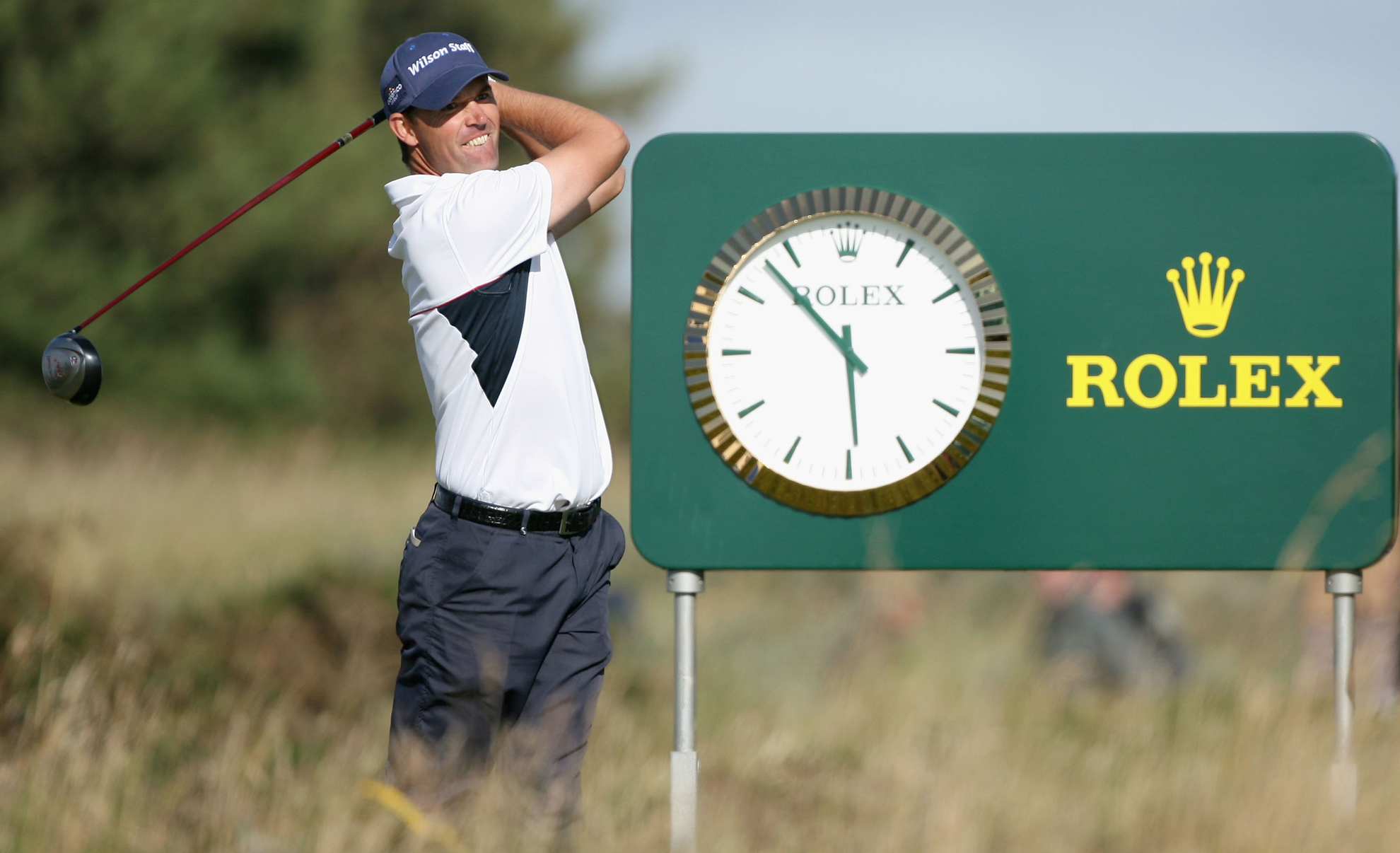
Some shots become shorthand for a career. For Padraig Harrington, that shot arrived on the 17th hole at Royal Birkdale on the final afternoon of the 2008 Open Championship, a 272 yard 5 wood, struck into a swirling crosswind, aimed not at safety but straight at history.
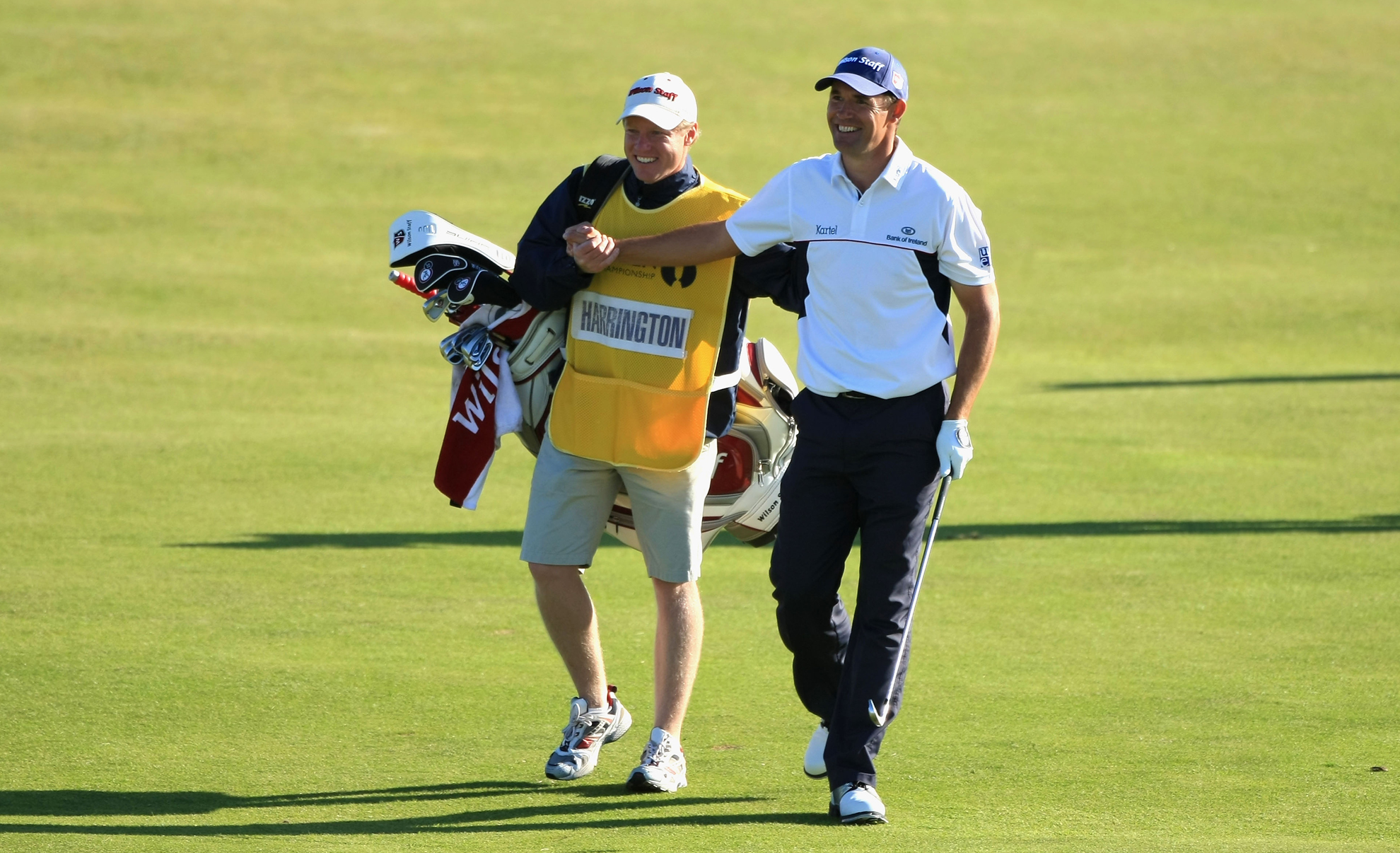
Harrington had a two shot lead over Ian Poulter with two holes to play. The conservative move was obvious: lay up short of the fairway bunkers, take his medicine, walk away with a par and a healthy cushion. Instead, his caddie Ronan Flood handed him his favourite club and the pair committed to the green in two. “It was 272 to the hole, I think it was about 228 to carry the bunker,” Flood later recalled of the decision. The ball found the putting surface. The eagle putt dropped. And with it, Padraig Harrington became only the second European in more than a century to successfully defend the Claret Jug, and set in motion the most productive stretch of his career.
A Defence Built on Pain
Twelve months earlier, Harrington had announced himself as a Major champion by running down Sergio Garcia in a four hole playoff at Carnoustie, overturning a six shot deficit to become the first golfer from the Republic of Ireland to win the Open. That victory changed everything about how he was perceived, transforming him from a steady, dependable pro into a genuine Major force. But Harrington himself has admitted the Carnoustie win never felt entirely clean, given his double bogey stumble at the 72nd hole. Birkdale, he later said, was different: a title defended in the toughest possible circumstances, with nothing left to argue about.
Getting there was nearly derailed before it began. Eight days before the championship, fresh off winning the Irish PGA title, Harrington injured his wrist in freak fashion while doing speed drills at home. “I decided well, I’ll do a one hander Happy Gilmore into the impact bag,” he explained, describing the mishap that left him barely able to practise in the run up to Southport. He abandoned a Wednesday practice round entirely and arrived at the first tee genuinely unsure whether he could complete the tournament, let alone defend his title.
Surviving the Storm
Royal Birkdale that week was less a golf course than an ordeal. Horizontal rain and gusting winds battered the Lancashire coast from the opening morning, and Harrington limped to an opening 74. He steadied himself with a battling 68 in round two, a score forged, he said afterwards, through sheer refusal to relinquish his title, telling reporters he wanted the weather to keep testing him rather than ease off. A third round 72, in conditions so severe that not a single competitor broke par all day, left him four over and two shots adrift of an unlikely leader: 53 year old Greg Norman, chasing a third Claret Jug two decades after his first.
Paired with Norman in the final group on Sunday, Harrington was, by his own admission, wary of the occasion. “I played with Greg Norman on the Sunday and I feared that a lot,” he said. It was the first time in his career he had gone out in the last group on the final day of a Major, and the tension showed early. Three straight bogeys around the turn handed the lead back to the Australian. But links golf has a way of punishing swagger, and Norman’s challenge disintegrated over the closing stretch as Harrington’s game hardened. By the time the field reached the 17th tee, Harrington held a two shot advantage, and that was when the 5 wood came out.
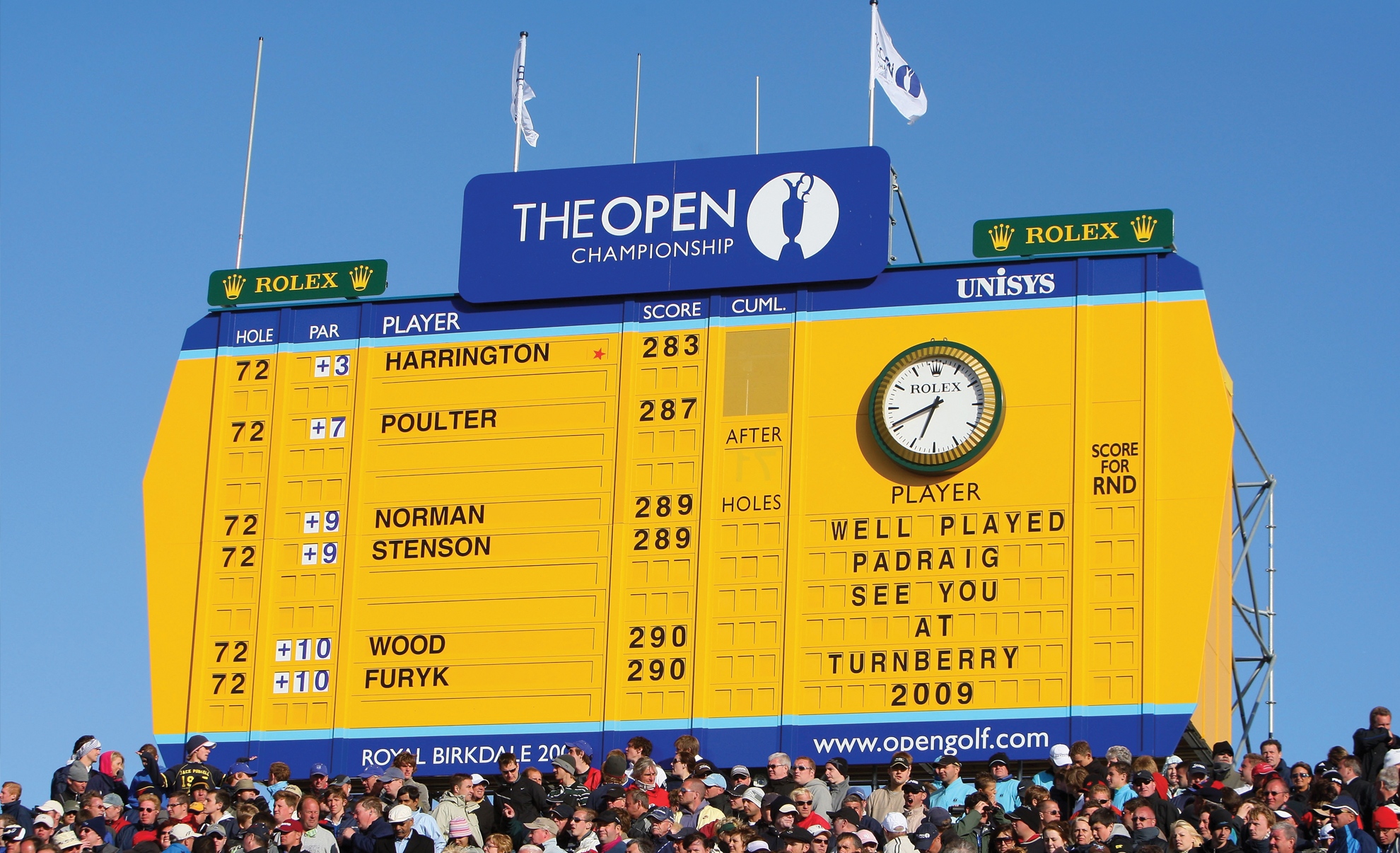
The eagle at 17 effectively ended the contest. A closing par completed a final round 69, the low round of a brutal championship, and a six shot swing over the back nine turned a tight leaderboard into a comfortable four stroke victory over Poulter, with Norman fading to a closing 77. Harrington’s aggregate of 283, three over par, told its own story about the conditions that week; no one had it easy, and Harrington simply endured it better than anyone else in the field.
A Piece of History
The achievement carried weight well beyond the scoreline. Harrington became only the fifth golfer in the previous fifty years to successfully defend the Open, joining a list that included Tiger Woods, Tom Watson and Arnold Palmer. More strikingly, he became the first European in over a century to retain the Claret Jug, a feat last managed by Scotland’s James Braid across 1905 and 1906. He was also the first golfer from outside the United States or Australia ever to win at Royal Birkdale.
Reflecting on the win years later, Harrington called it the most satisfying of his Major victories, not because it was the biggest margin, but because of the manner in which it was earned, under sustained pressure across two brutal weekend rounds rather than a single hot final round. “For as long as we go on there will be an Open Championship and my name will be on that trophy,” he said in the immediate aftermath, capturing both the disbelief and the permanence of what he had just done.
Three Weeks Later, a Third Major
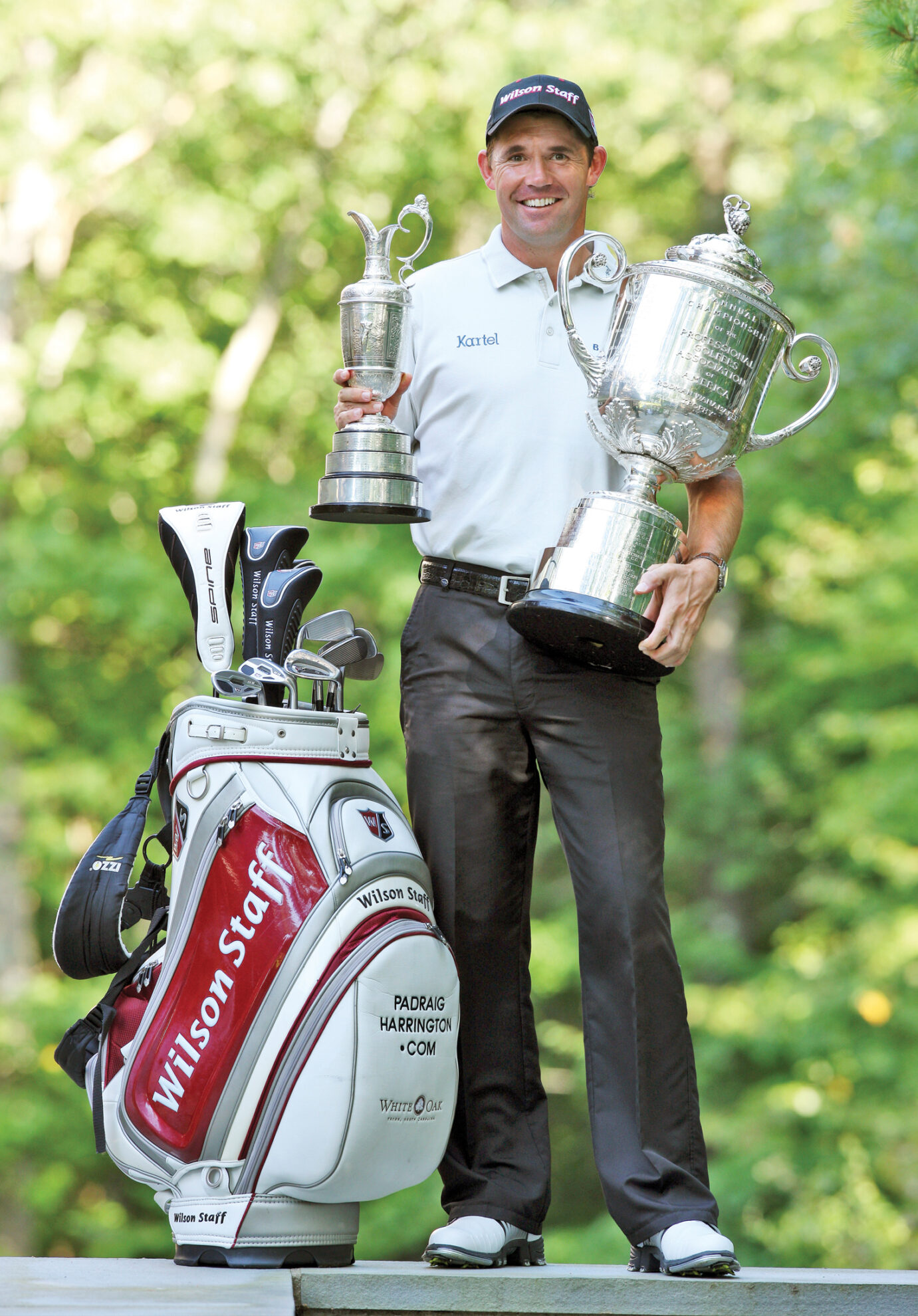
If Birkdale confirmed Harrington as a Major champion, what followed confirmed him as one of the finest players on the planet. Just three weeks later, at Oakland Hills Country Club in Michigan, Harrington produced arguably the most emphatic closing stretch of his career to win the PGA Championship, his third Major title in thirteen months.
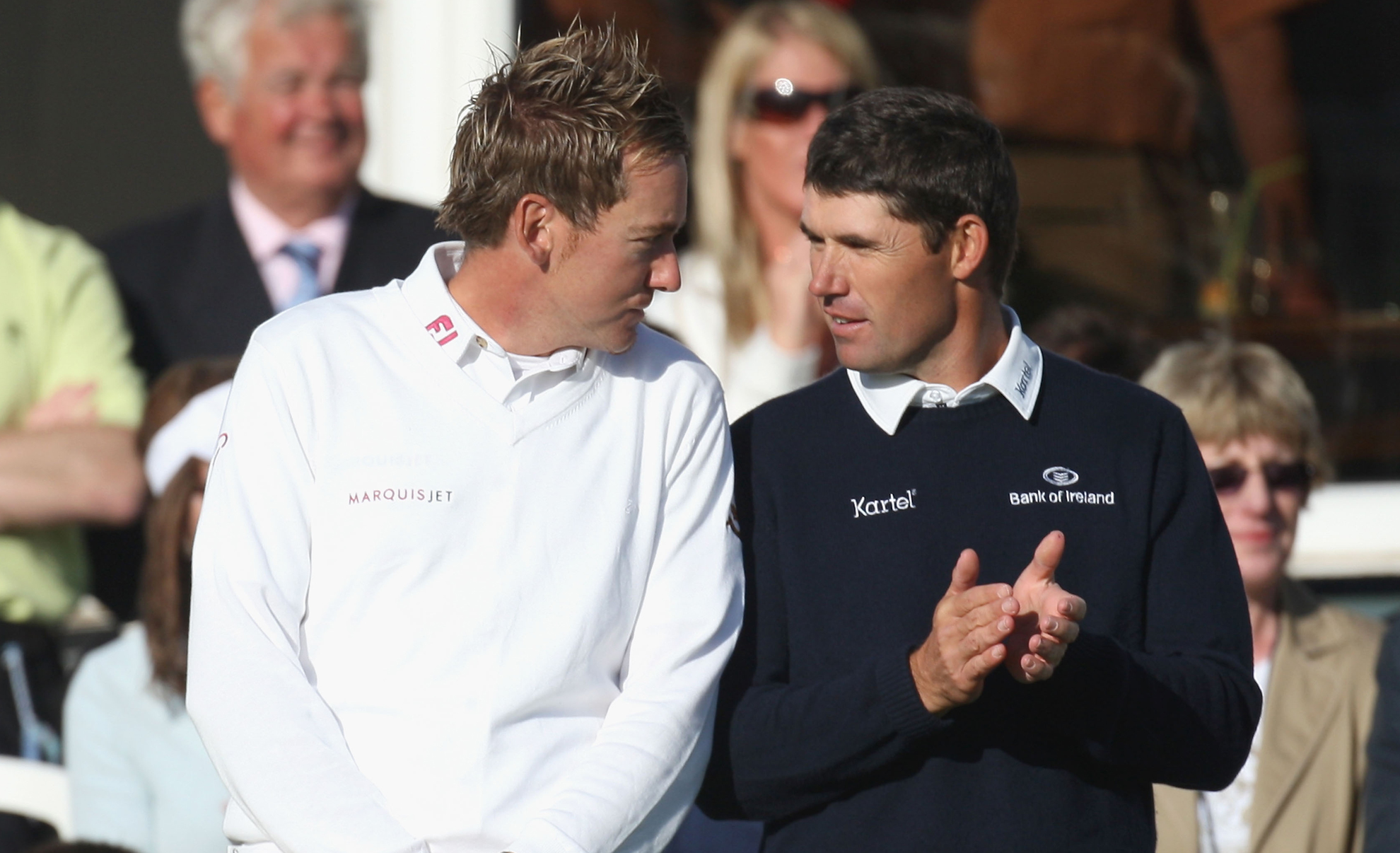
The Oakland Hills week began unpromisingly. Harrington sat five over through 36 holes, well outside the frame. But a weekend of relentless scoring, matching 66s in the third and fourth rounds, hauled him into contention and, ultimately, to victory. Once again, Sergio Garcia was the man standing in his way, leading by a stroke playing alongside Harrington in the final round before a pushed 6 iron found the water at the par 4 16th. “There is no doubt that was the opportunity I was looking for,” Harrington said afterwards, with characteristic bluntness about seizing his moments. He would go on to one putt his final three greens, par, birdie, par, sinking a 15 footer on the 72nd hole to seal a two stroke win over Garcia and Ben Curtis.
The victory made Harrington the first European to win the PGA Championship in 78 years, since Scotland’s Tommy Armour in 1930, and the first golfer from Ireland ever to lift the Wanamaker Trophy. Asked what separated him from Garcia in the closing holes, Harrington pointed to hard won experience: “I felt an edge in terms of my ability to take an opportunity when it comes around.”
The Making of a Major Champion
Taken together, the six weeks between Carnoustie’s aftermath, Birkdale’s storm and Oakland Hills’ back nine surge transformed Harrington’s career. He finished 2008 as PGA Tour Player of the Year, the first European to receive the honour, and climbed to a career high third in the world rankings. Three Majors from six starts placed him, statistically, among the most dominant Major performers of his generation over that stretch, a run bookended by two head to head victories over Garcia in the biggest moments the sport offers.
What Birkdale provided, more than any statistic, was proof of durability. Carnoustie had shown Harrington could win a Major under pressure; Birkdale showed he could do it again, in worse weather, with a compromised body, while defending rather than chasing. That distinction mattered to him. Years later, preparing to return to Southport, Harrington spoke of the win with clear affection, noting it left him with no lingering doubts of the kind that had followed his breakthrough at Carnoustie.
The 5 wood at the 17th remains the enduring image, a champion refusing to play safe when he had every excuse to. But it was the accumulation that mattered: an injured wrist overcome, a five time Major runner up in Norman seen off, a century old European drought at the Open ended, and, within a month, a 78 year drought at the PGA Championship broken as well. Few stretches in modern golf history compress so much history into so little time. For Padraig Harrington, Royal Birkdale wasn’t just a second Claret Jug. It was the platform from which he confirmed himself, definitively, as a Major champion.