

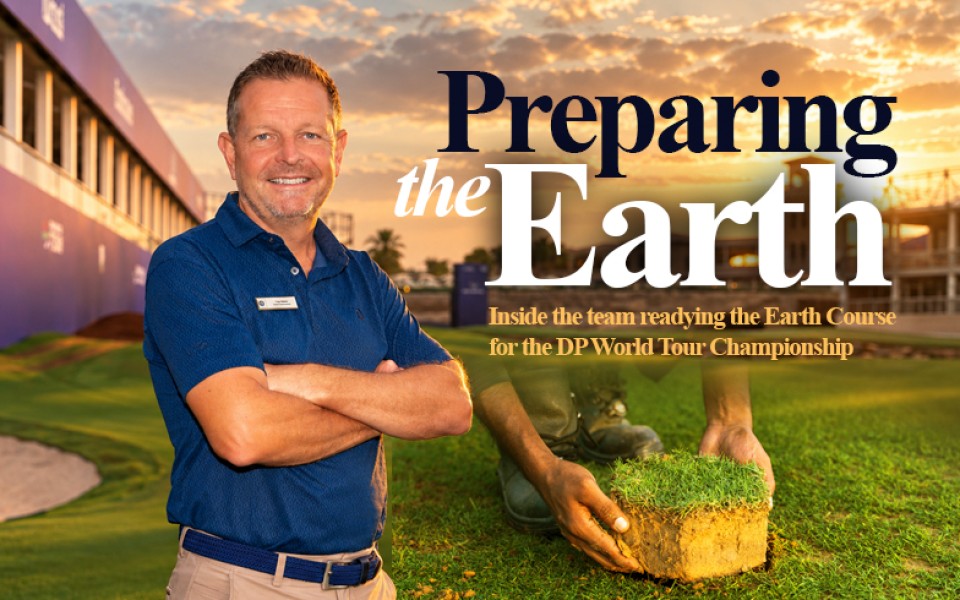
Inside the team readying the Earth Course for the DP World Tour Championship
Hours before sunrise, the Earth Course team at Jumeirah Golf Estates is already at work. Supervisors, foremen and greenkeepers turn soil tests and overnight weather readings into 18 greens that play the same on Monday as they do on Sunday. The countdown to the DP World Tour Championship starts long before November, with a post-event debrief, a summer of aeration and a month of fine-tuning in October.
Worldwide Golf sat down with Golf Course Superintendent Craig Haldane, who explained how the team and process work, from the first alarm to the last mower.
When does your preparation for the DP World Tour Championship begin, and what are the key milestones between then and the first tee shot?
Craig Haldane: Having taken over earlier this year, my initial focus has been understanding the two courses, the turf and the irrigation, and how they respond to different practices.
The stock answer is the day after the final Sunday of tournament week. It’s not entirely true, but it’s not entirely false either! We debrief with the Tour Agronomy team as soon as the last group finishes and carry out a critical analysis of the week. What should we continue? What could we improve? What did we learn? The answers shape our planning for the following year.
In reality, the period after the event is just as much about recovery. We look closely at our soils, leaf tissue, water quality and organic matter, and plan our early summer aeration programme.
That aeration is driven by agronomic targets fundamental to healthy surfaces at every course in the region, event or no event. We typically schedule two closures. By the second, we certainly have one eye on November, making the late-August aeration a key milestone.
Recovery from that aeration is when we really begin to fine-tune. October is particularly important: gradual refinement rather than dramatic last-minute changes, moving towards our desired surface quality, consistency, firmness and presentation.
The final weeks are about details, coordinating with our wider operations team and working closely with the DP World Tour on the agreed set-up. By the first tee shot, the hard work should be done. Tournament week is about execution, monitoring and sensible adjustments.
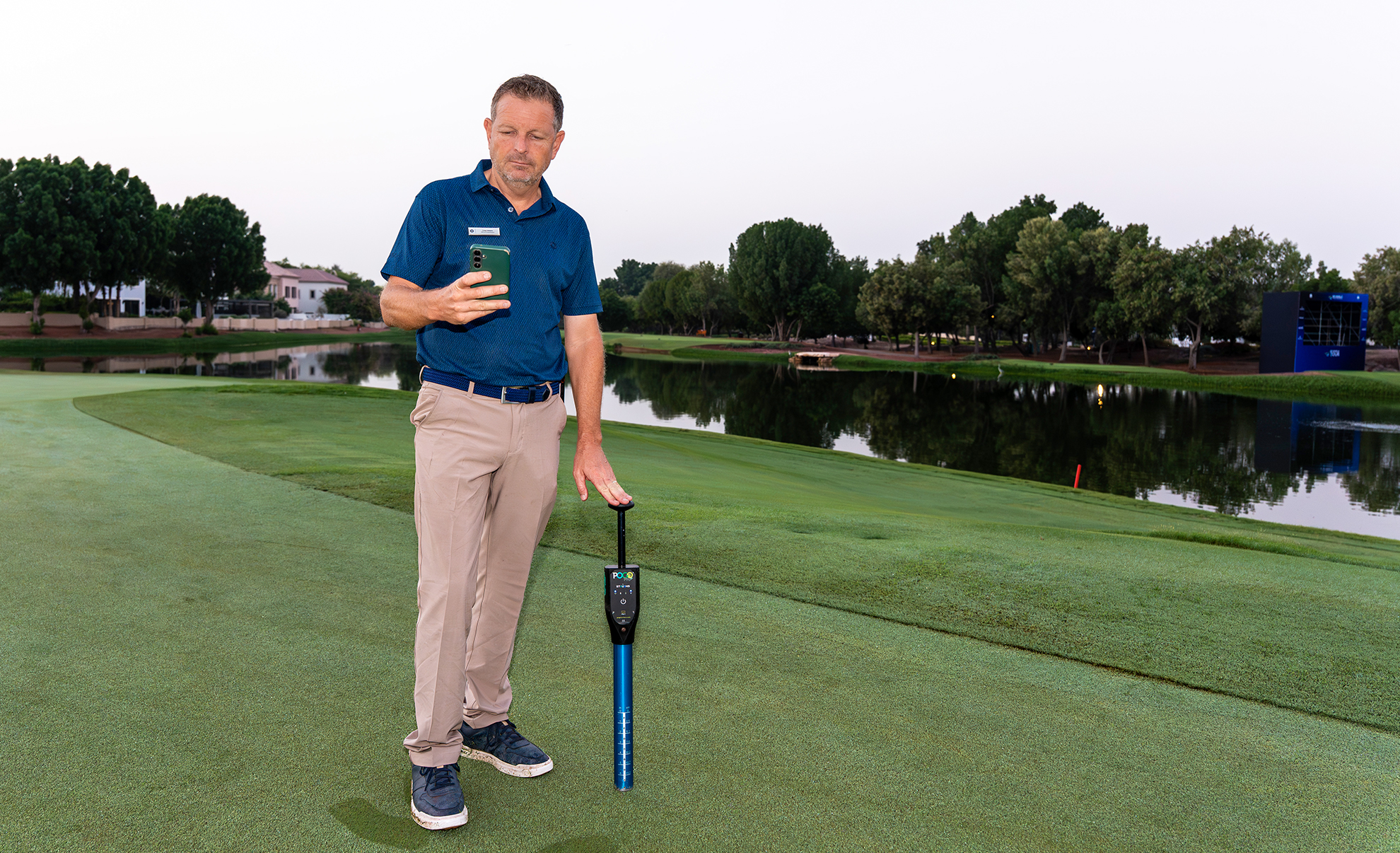
What does a typical day look like for you and your team during tournament week?
Craig Haldane: It starts with a 3am alarm clock! Mind you, that doesn’t change for us in Agronomy throughout the year. We’re early risers!
Tournament week is busy, but the key is a clear plan and a team that understands what is expected. There are a lot of moving parts, so communication is incredibly important.
Jamie Wright leads the Earth team, with great support from Callun Brook and our supervisors, foremen and greenkeepers. Jamie is probably the busiest man on staff in the run-in and throughout tournament week, and he does an incredible job leading daily operations. This will be his third event, so his experience is invaluable.
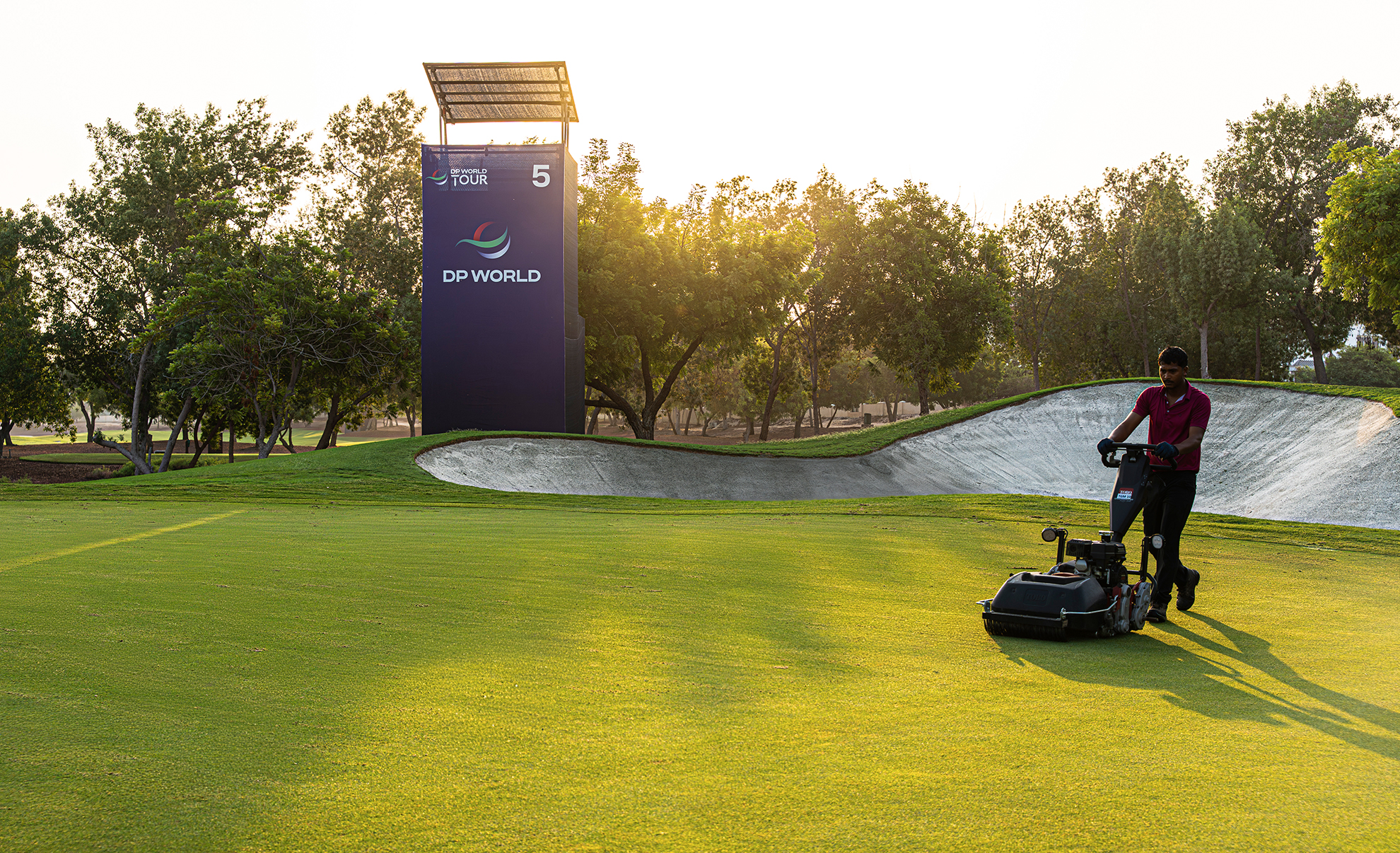
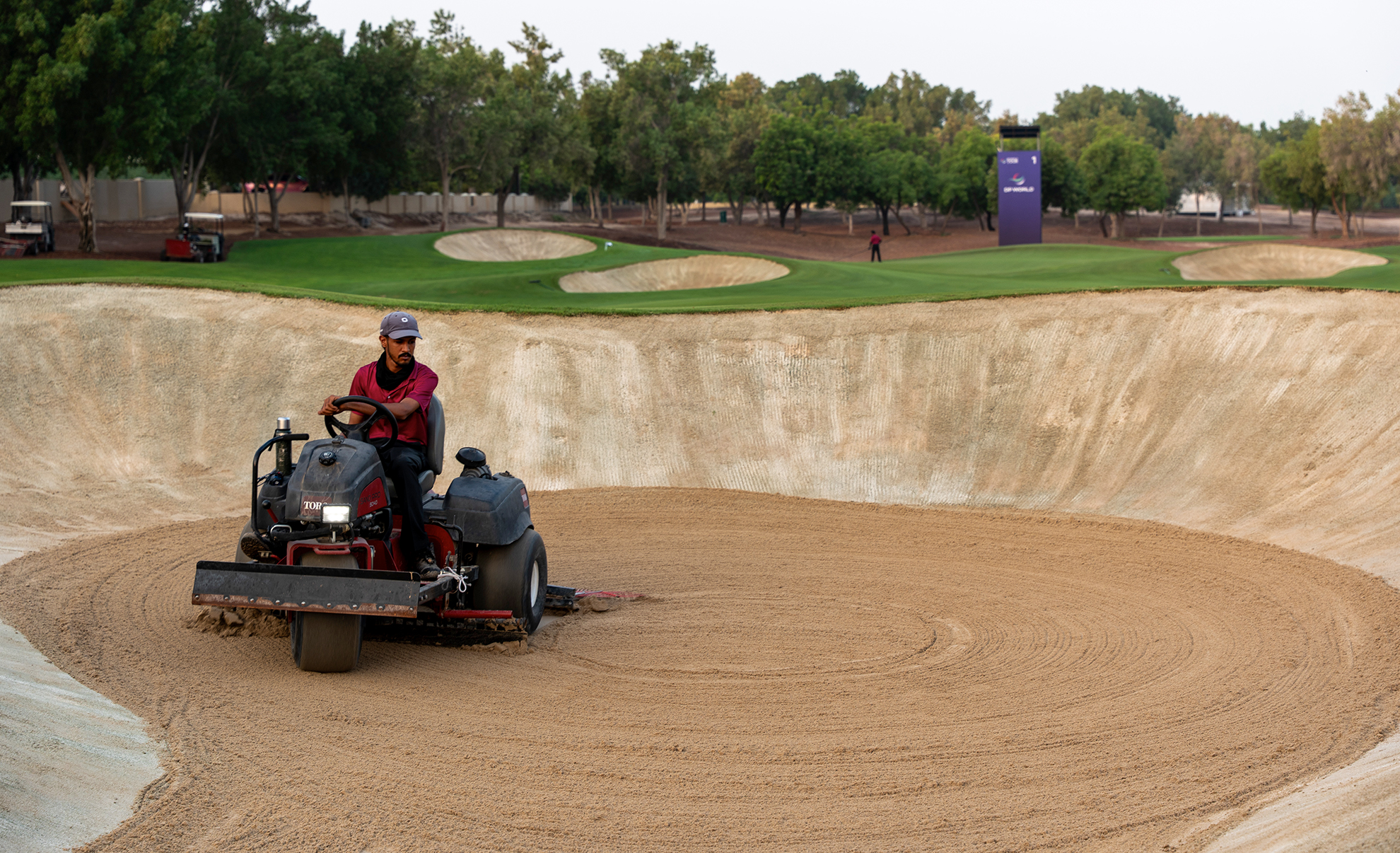
We take data from the previous day and put detailed plans together the evening before. The day starts with an assessment of overnight temperatures, humidity, wind, moisture and how the surfaces have responded. From there, we coordinate mowing, rolling, bunker preparation, presentation and any requirements agreed with the Tour.
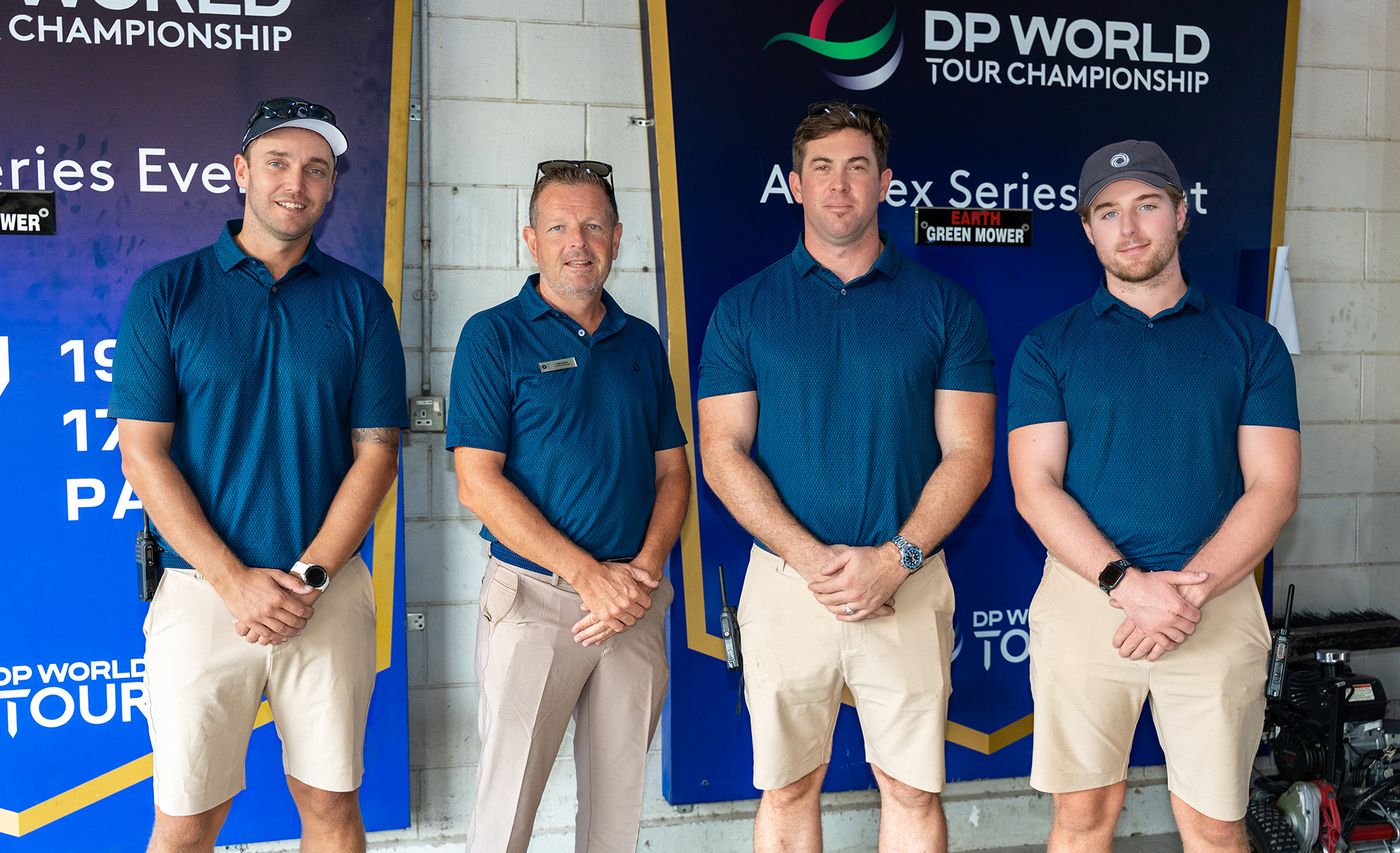
We aim to have the greens where we want them for Monday’s practice round and keep them there through Sunday. It’s not just about completing the work; it’s about doing it to the required standard at the right time.
Throughout the day, we monitor the course and talk with the Tour Agronomy team. Conditions change, and moisture management in particular demands close attention in this climate.
My role is to support the team, make decisions when needed and keep everyone focused on the bigger picture. I believe in giving people responsibility and trusting them to do their jobs.
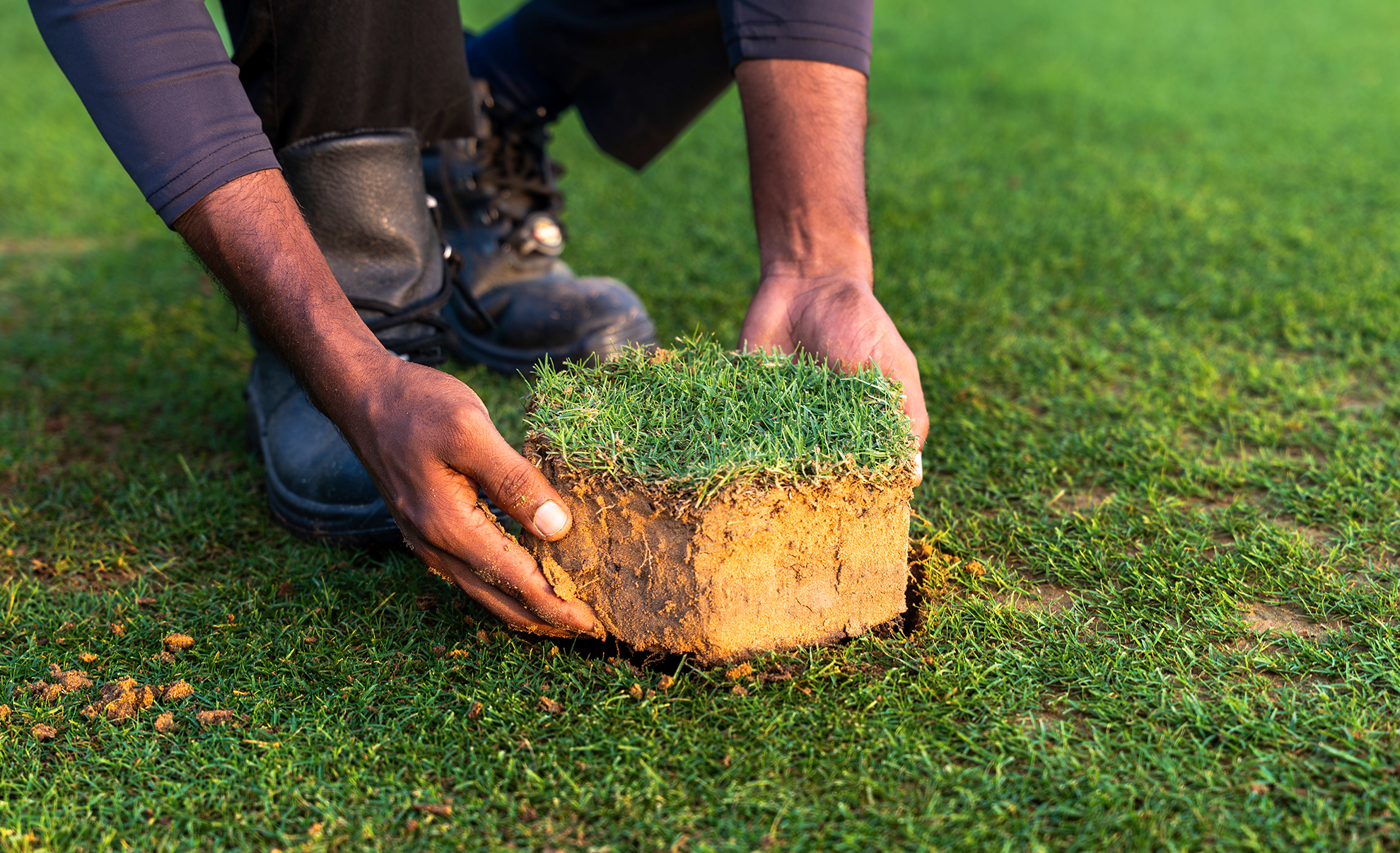
How do you set up the Earth course for Tour play compared with normal member conditions, including green speeds, rough and bunkers?
Craig Haldane: Tournament preparation is geared towards elite professional golf, whereas member conditions must be enjoyable and playable for a much broader range of golfers.
That doesn’t necessarily mean faster, firmer or more difficult. It means challenging the best players in the world while staying true to the design and intended strategy of the course.
On the greens, we work towards speeds and firmness agreed with the Tour, but consistency matters as much as the headline number. A fast green is of little value if it’s inconsistent, and the surfaces must stay healthy enough to last the week.
With the rough, we want an appropriate penalty for missing the fairway without making recoveries unnecessarily unpredictable. In the bunkers, sand depth, consistency and firmness matter alongside the presentation of faces and edges, so players face a fair challenge when they find the sand.
Ultimately, the course should reward good golf and expose poor execution. We want players to think their way around Earth. The aim isn’t difficulty for its own sake, but a proper test at the highest level.
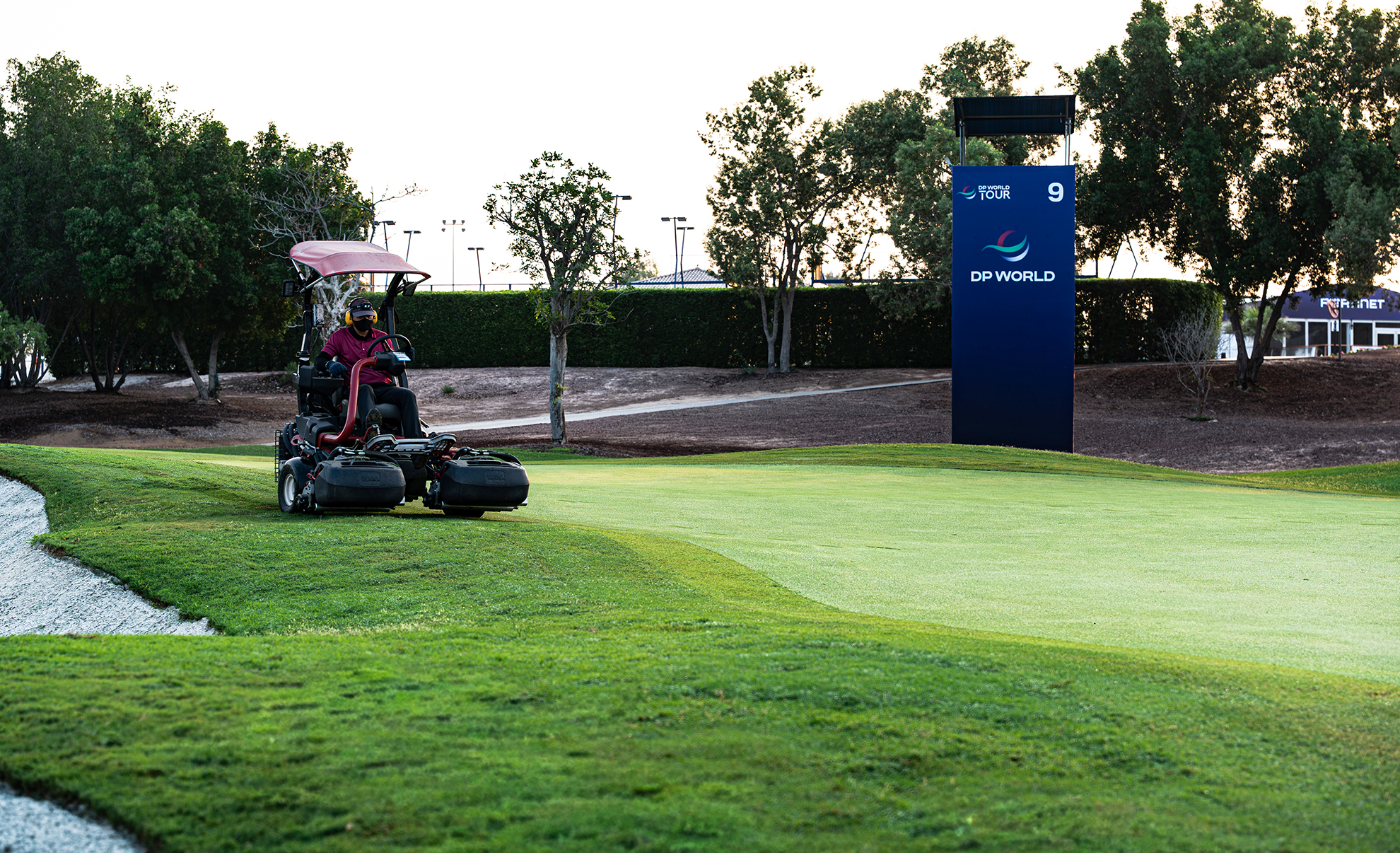
What are the biggest challenges of preparing a Tour-standard course in the Gulf climate?
Craig Haldane: The climate is the biggest challenge, particularly when delivering fast, firm, consistent surfaces while keeping the turf healthy.
The transition from intense summer heat into the cooler growing season matters. As temperatures change, the grass responds differently, influencing nutrition, irrigation, mowing and surface preparation. You can’t follow a fixed programme and expect the same results every year.
Water management is a major consideration. Too much moisture in the rootzone affects firmness, ball roll and consistency, but letting the turf get too dry compromises plant health and recovery.
Water quality adds another layer. Salinity and the balance of ions influence both soil and plant, so understanding how the irrigation water interacts with the rootzone is fundamental to long-term turf performance.
For me, it comes down to managing the turf in front of us. Data and technology are valuable, but they must be combined with observation and experience. The climate demands that we stay adaptable and listen to what the course is telling us.
How do you use tee positions, fairway widths and pin placements to create risk and reward, particularly over the closing holes?
Craig Haldane: This is where agronomy and course strategy work together. The Tour decides tee positions and pin placements; our job is to present the course so it rewards good decision-making and execution, rather than simply making it harder.
Tee positions change the angle of approach, the club choice and the risk a player will accept. Fairway widths and landing areas influence whether a player takes an aggressive line or a conservative one.
Pin positions can change a hole’s character considerably. A pin tucked behind a bunker or near a slope may tempt a player to attack, but brings the consequences of a miss into play. The best positions reward a well-executed shot while still allowing a sensible alternative.
Over the closing holes, with players chasing a title, protecting a lead or climbing the Race to Dubai, these decisions become even more significant. The course should offer calculated risks, with consequences attached.
Agronomy can’t create good course strategy on its own, but it can support or undermine it.
How do you balance green speed, firmness and slope so the greens stay fair across all 18 holes, and what do you measure to keep them consistent?
Craig Haldane: Green speed gets a lot of attention, but speed alone doesn’t tell you whether a putting surface is good.
You have to consider speed alongside firmness, moisture, smoothness, trueness and the natural slopes. All of those influence how a putt behaves and how fairly a green receives an approach.
A soft, bumpy green running at 13 on the Stimpmeter is obviously not as good as a firm, true and smooth one running at 11. Finding that balance is critical to the week’s success.
We combine measurement with observation. Stimpmeter readings track speed, daily moisture readings guide irrigation, and we assess firmness, inspect the surfaces and watch closely how the ball rolls.
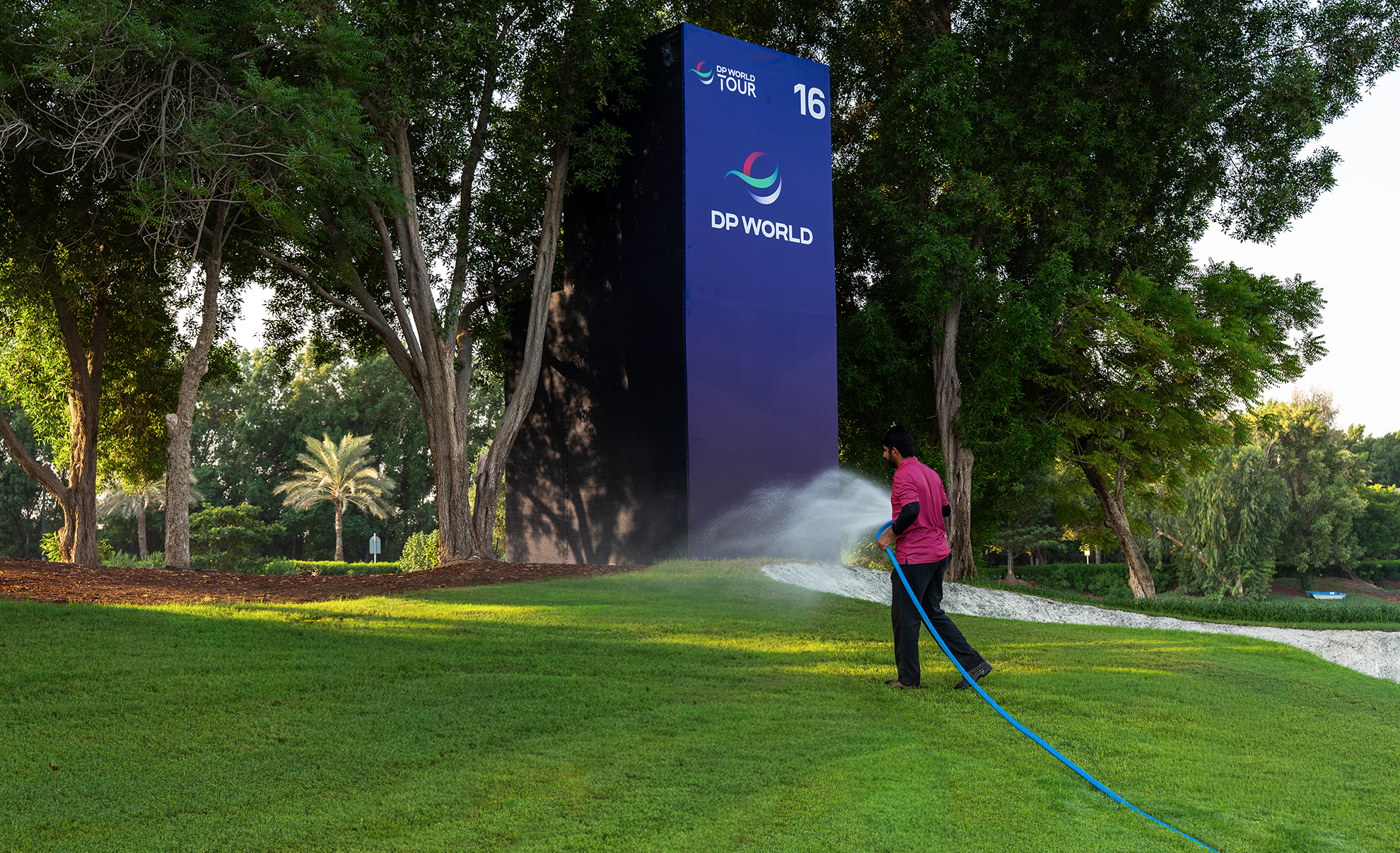
Consistency across all 18 greens is key. They don’t share identical contours, sunlight, airflow or traffic, so the management required varies from green to green.
There’s also a balance between short-term performance and plant health. You can push a green hard for a short period, but the real skill is producing the desired conditions without compromising the turf’s ability to withstand the tournament. That takes continual assessment, not a set formula.
Does knowing this is the last event of the Race to Dubai change how you approach the set-up, and has your approach evolved since the finale first came to Jumeirah Golf Estates?
Craig Haldane: The significance certainly adds to the occasion. I’ve been fortunate to deliver many events, but this is my first DP World Tour Championship at Jumeirah Golf Estates. Players are competing for the season-long title as well as the tournament, which brings extra attention and expectation.
From an agronomy perspective, though, the fundamentals don’t change: the best possible surfaces, consistent conditions and a fair test, whatever the event.
Where the occasion influences us is in the level of detail, planning and coordination. Every aspect of presentation and playing conditions matters, so we must anticipate what’s coming and make sure the whole team understands the standards we’re working towards.
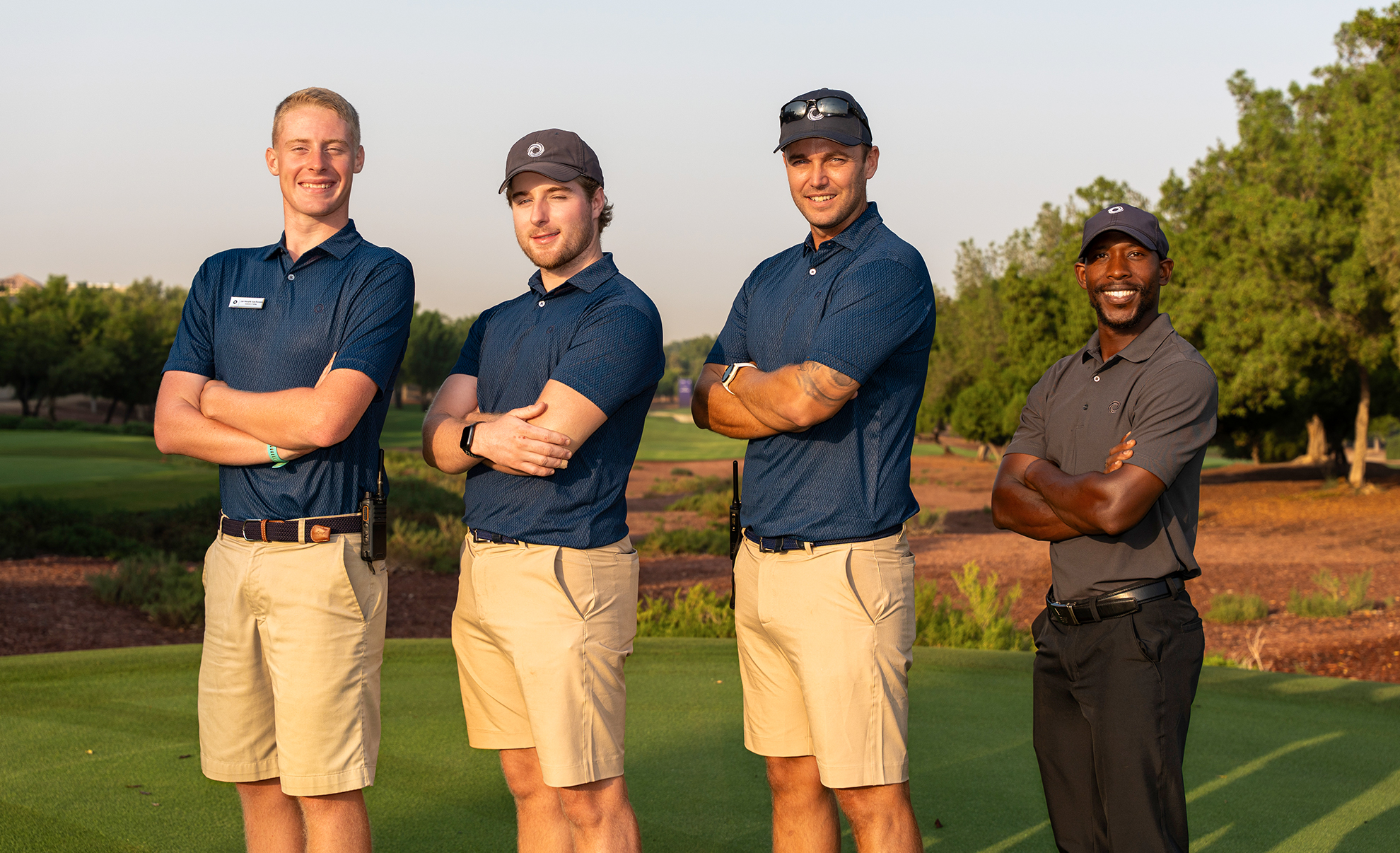
I’m fortunate to have inherited a fantastic team of greenkeepers with a wealth of experience, and I’ve taken every opportunity to ask questions, listen and learn from them. You’re only as good as your willingness to keep learning.
Ultimately, a tournament of this stature is a team effort, involving our wider Golf Operations and support teams too.
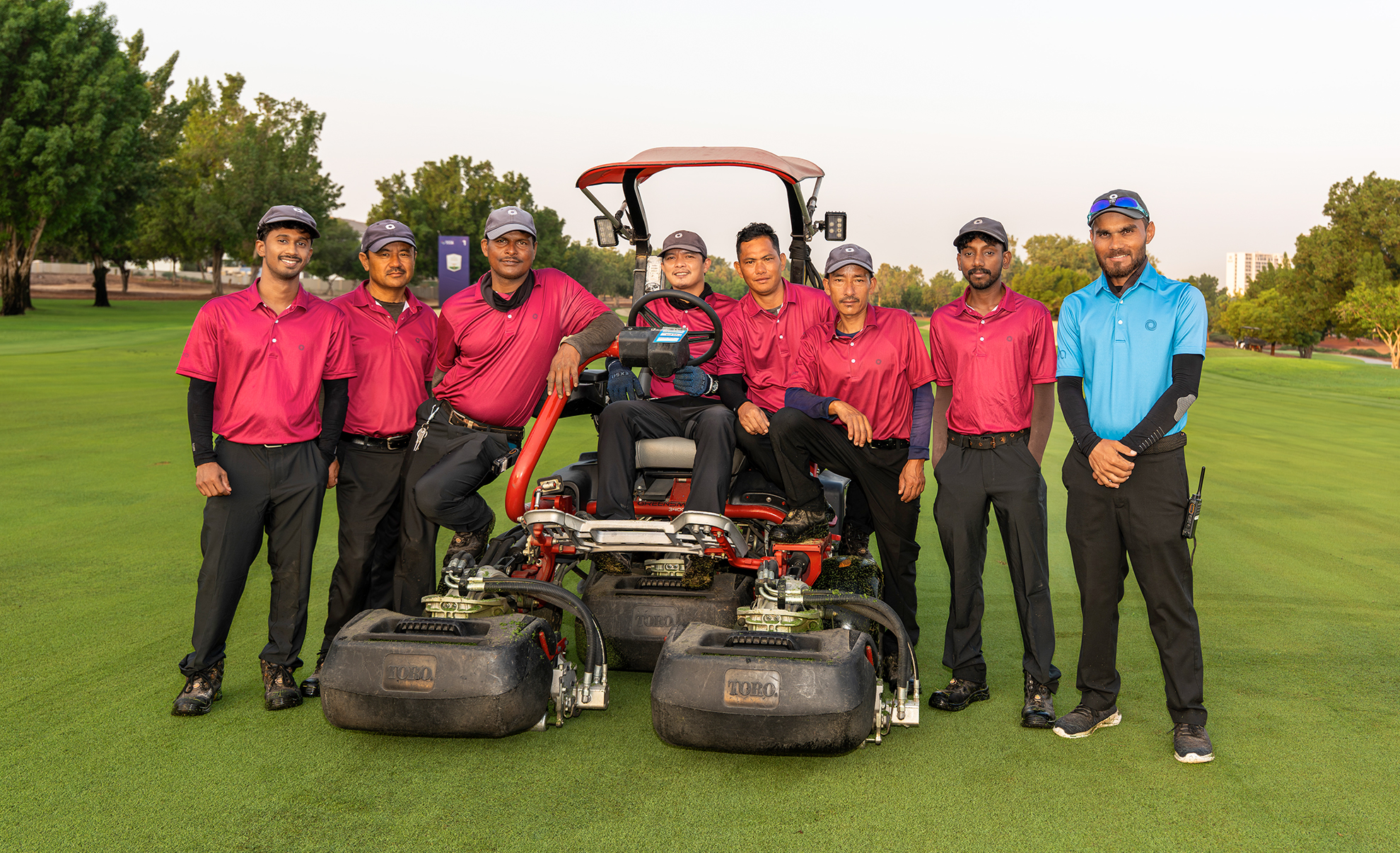
Who are the people behind the course that viewers don’t see, and what would you like to say about them?
Craig Haldane: On television, viewers see the finished product, but not the planning, the hours of work or the many decisions behind those conditions.
And that stretches well beyond Agronomy. We’re supported by our leadership team, looked after by our F&B colleagues and encouraged by our membership. The site set-up is immense, and the experience of everyone who attends is paramount.
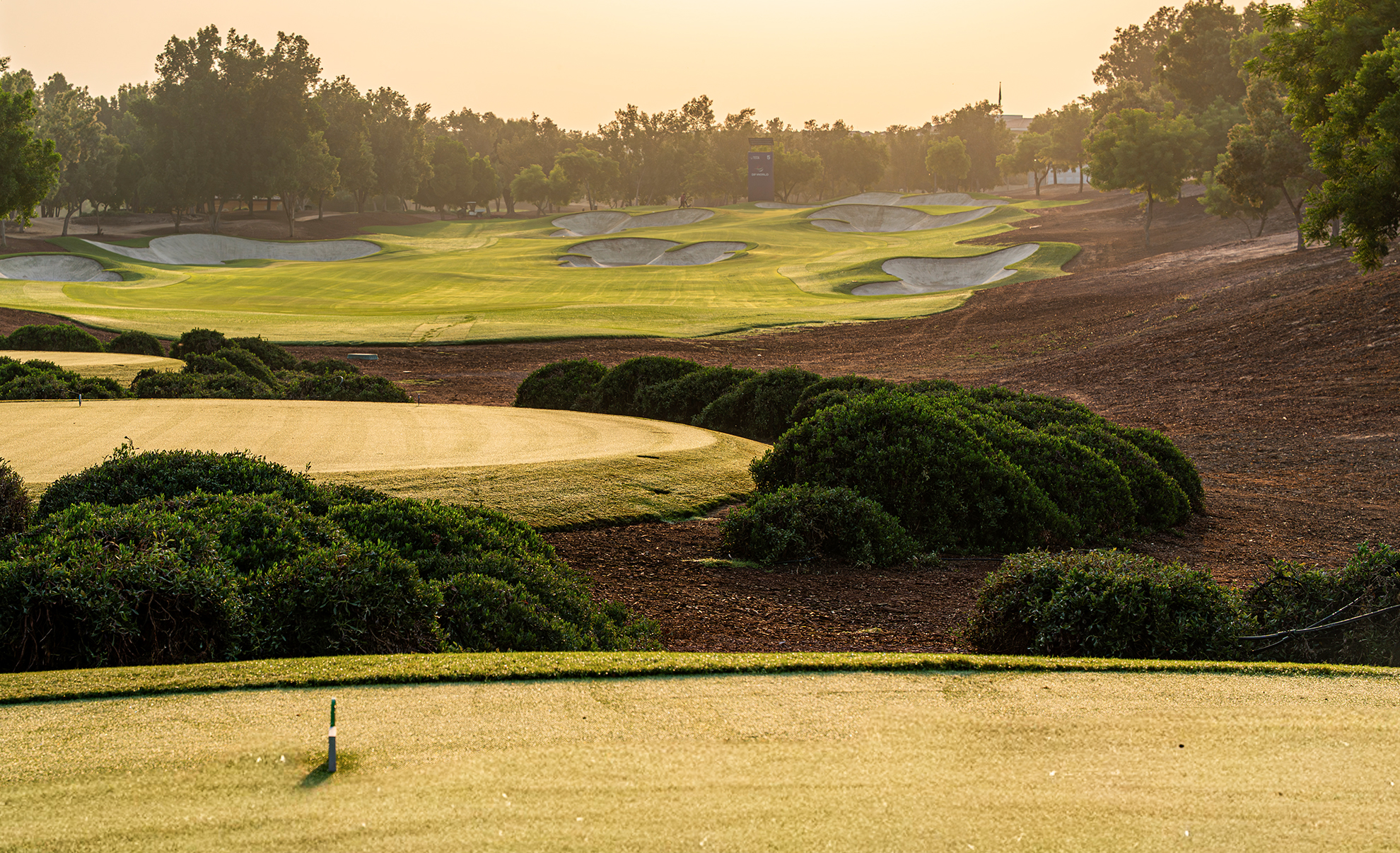
I’m very pleased to be back in Dubai and at Jumeirah Golf Estates. Having spent much of my career in the region, it’s exciting to be part of the team preparing Earth for the DP World Tour Championship. Our focus is on doing the fundamentals well, paying attention to detail and delivering a course and an experience everyone involved can be proud of.