
The UAE has spent decades building some of the finest golf courses on the planet: immaculate conditioning, five-star clubhouses, designers whose names normally sit on trophies. But if the next phase is about growing the game from within, what it really needs isn’t another championship course. It needs somewhere affordable to learn.
Where does a complete beginner actually go? Learning golf on a championship course is a bit like teaching somebody to swim by throwing them off the back of a yacht.
The Price of Perfection
This isn’t an argument against the UAE’s golf clubs or their pricing. Championship courses in the desert are expensive to operate: water, agronomy, machinery, staffing and constant maintenance all come at a cost, and that premium green fee becomes easier to understand once you factor in the level of service expected here. These courses also draw golfers from Britain and Europe every winter, and remain central to the tourism product.
Golf tourism deserves to remain part of the UAE’s strategy, but tourism and participation aren’t the same thing, and recent regional uncertainty has underlined the importance of building the game from within. Visitors can disappear quickly when airlines change schedules or headlines turn unsettling. Residents don’t. So could the next great investment be something less glamorous than another championship layout?
When Dubai Golf Wasn’t Glamorous
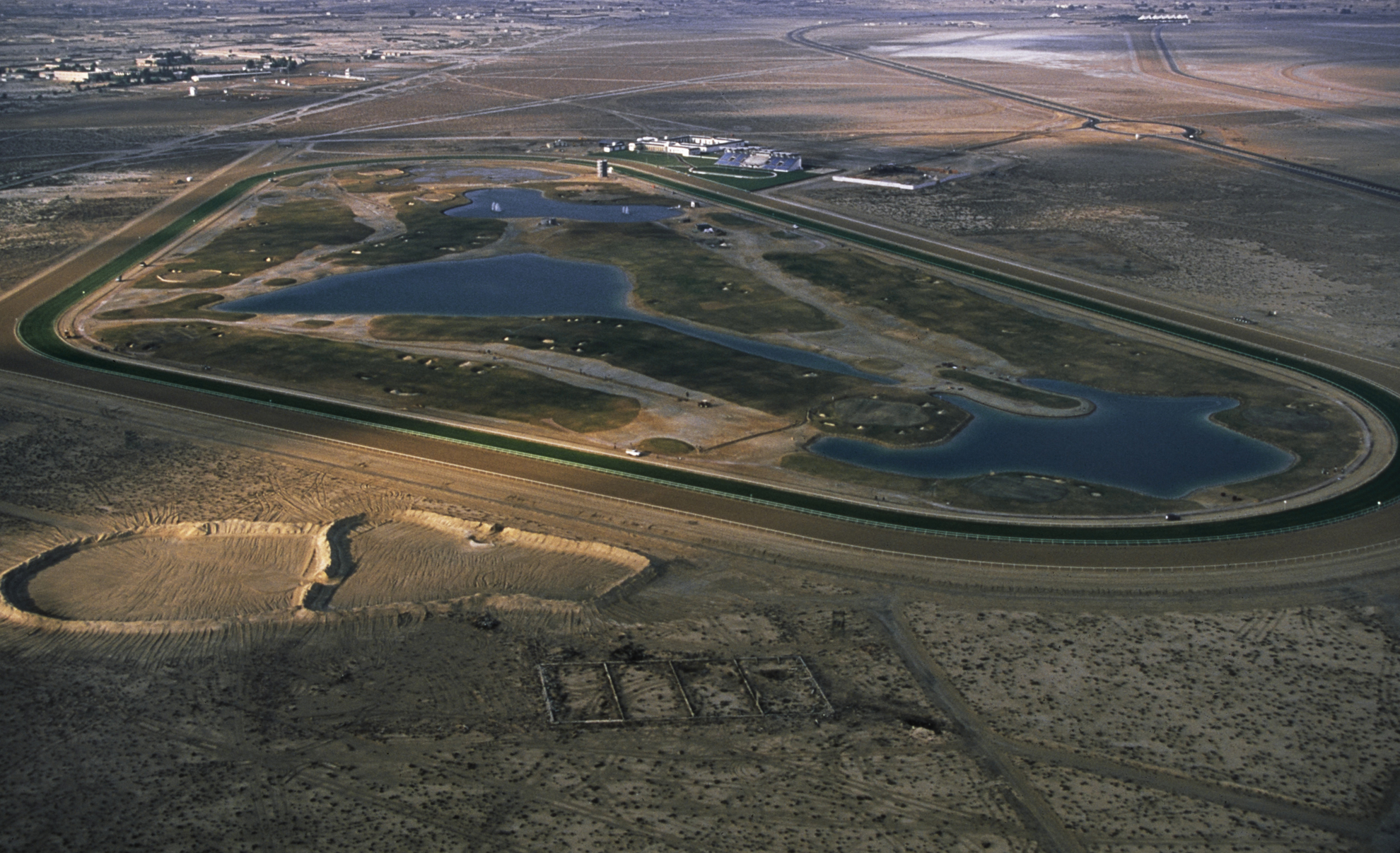
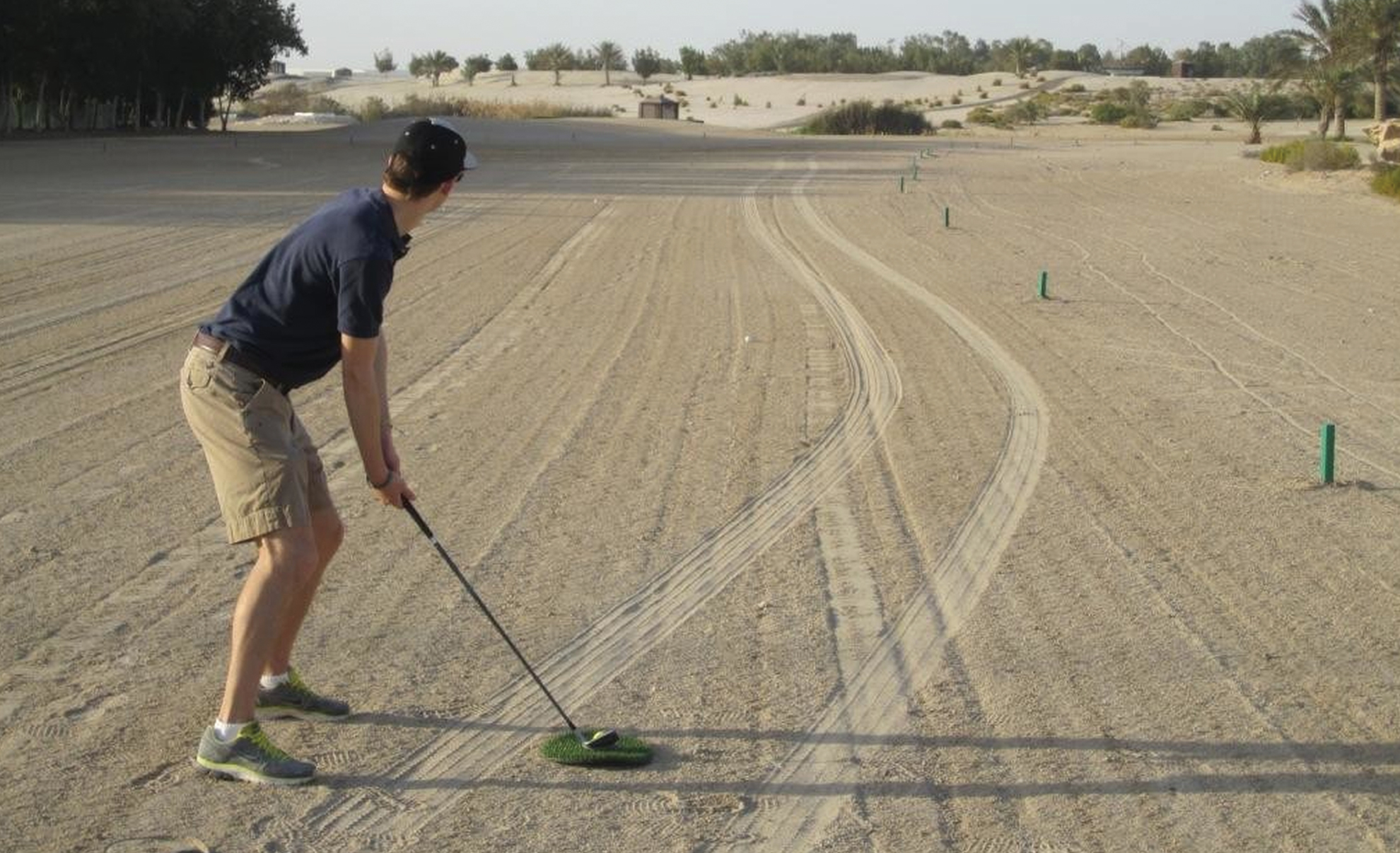
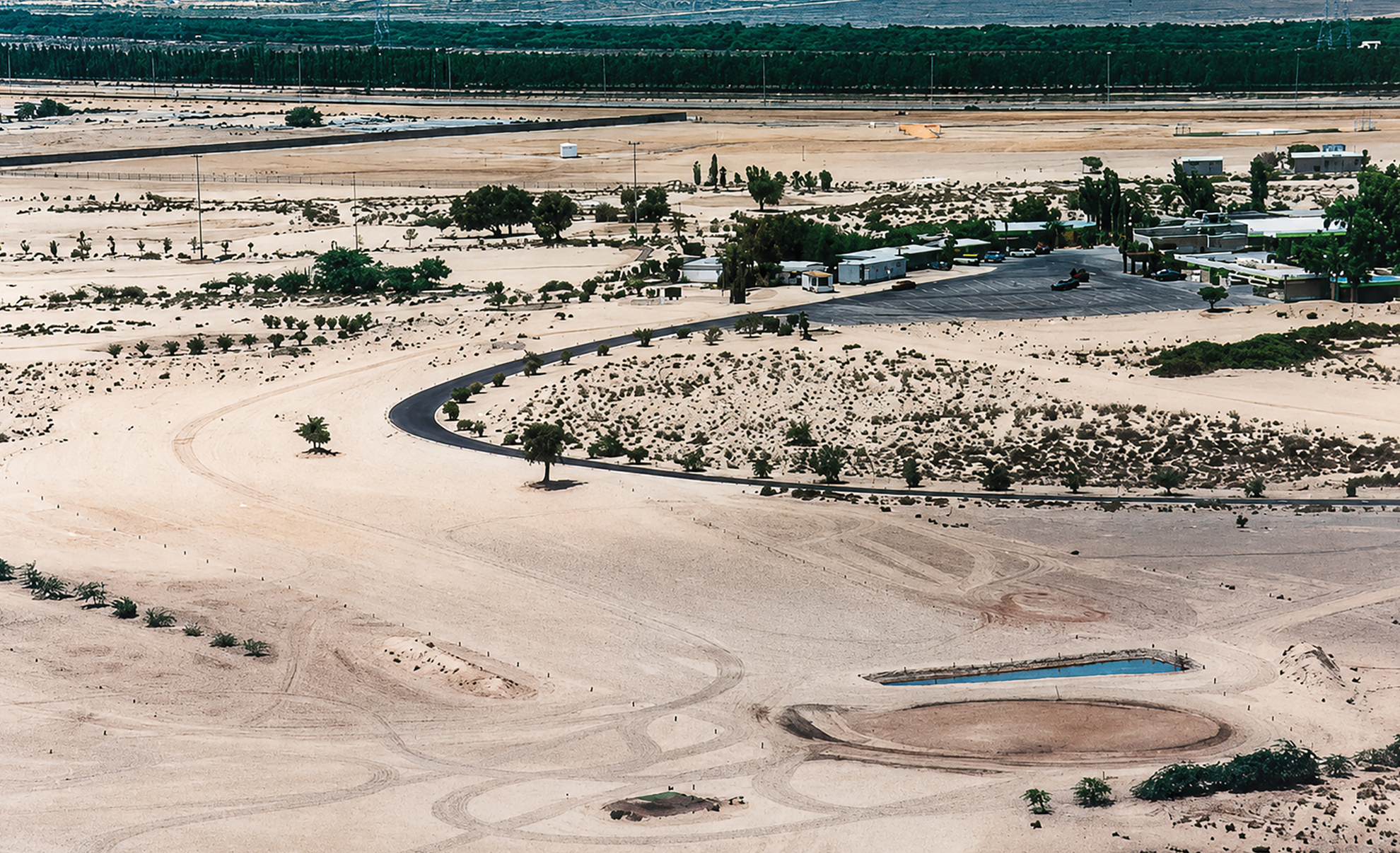
Older golfers in Dubai will remember a very different landscape. Dubai Country Club opened in 1971 after 150 members reportedly contributed AED 500 each, and the original course was built largely by members using borrowed machinery. There wasn’t much grass; golfers played from artificial mats across the sand and putted on oil-treated surfaces known as browns. It sounds ridiculous compared with modern Dubai golf, and it worked, because it gave ordinary residents somewhere to play without the fear of ruining a pristine fairway.
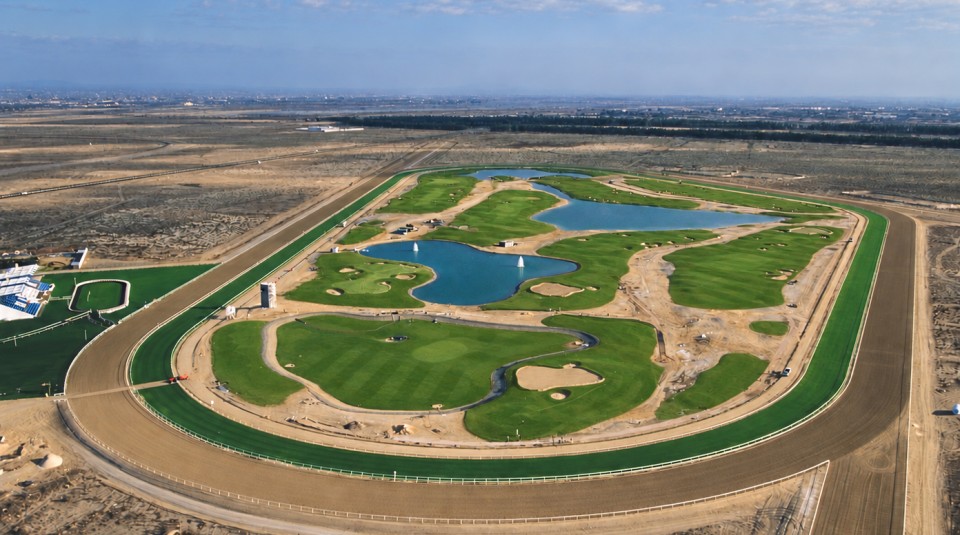
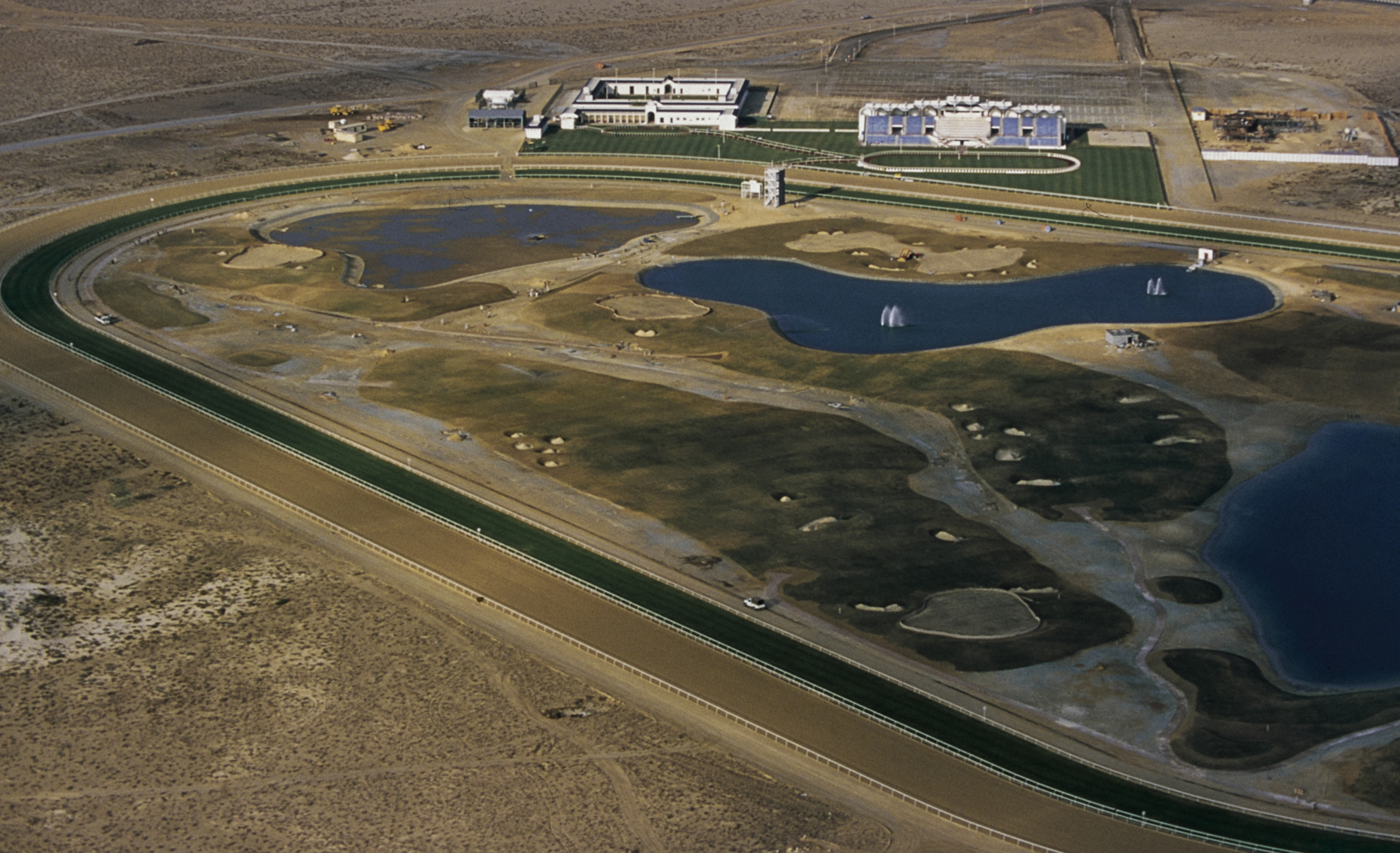
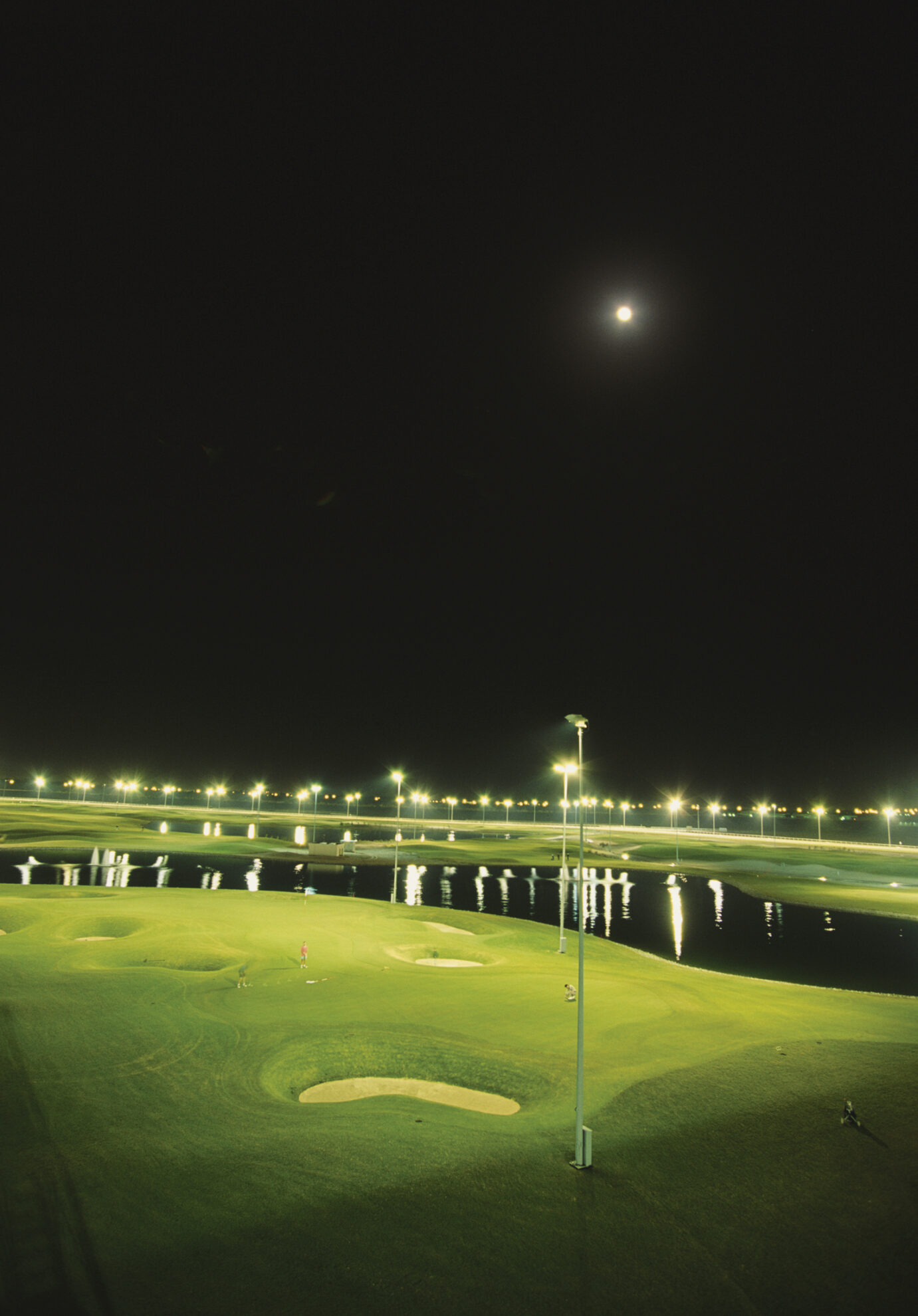
Then came Nad Al Sheba, on the site associated today with Meydan, the Middle East’s first fully floodlit 18-hole course. Golf could suddenly fit around life: finish work, play nine holes under the lights. It was also playable, with space, limited rough and bunkers from which normal human beings could occasionally escape.
That course closed in 2008 for the Meydan racecourse, and it would have been easy for that piece of Dubai’s golfing history to simply disappear. Instead it was rebuilt on the same plot by Peter Harradine, the architect behind Abu Dhabi Golf Club, Jebel Ali Golf Resort and Doha Golf Club, whose brief wasn’t another punishing championship test. Reborn as The Track, Meydan Golf, the rebuilt layout kept the floodlit format and multiple tees on every hole, so a beginner and a low-handicapper can genuinely play the same hole together, which is very likely why it has become one of Dubai’s more popular courses: it never lost the character that made the original worth saving.
Neither course would match the spectacular ones the UAE enjoys today, but they provided the first rung of the ladder, and somewhere during the UAE’s journey towards championship golf, that rung became harder to find.
Golf’s Biggest Enemy
Golf has always had three problems: it is difficult, it takes a long time, and it can be expensive. Compare it with padel, where you can give somebody a racket and within half an hour they’re having a game. Golf isn’t like that; it requires patience, which means everything surrounding the learning process needs to be as easy as possible. Other golf markets are starting to offer useful lessons on how.
America’s Golf Boom
The United States is enjoying one of its strongest periods of golf participation in decades. According to the National Golf Foundation, 48.1 million Americans aged six and above participated in golf in 2025, yet only 29.1 million played on a golf course; another 19 million participated exclusively away from traditional courses. America also welcomed around 3.3 million beginners in 2025.
Millions of people, in other words, are discovering golf without ever standing on the first tee of a championship course. Golf has traditionally assumed the course is where the journey begins; increasingly, it’s where the journey leads. Topgolf has shown how this works: no handicap, no clubs, not even much interest in golf required. Turn up with friends, order some food, hit golf balls. Some of those customers will never progress beyond that. Others will become golfers.
Dubai Is Already Living This
Dubai doesn’t need to look across the Atlantic to see this pattern; it’s happening on its own doorstep. Topgolf Dubai, at Emirates Golf Club since January 2021, welcomed more than 650,000 guests in a single recent year and saw 22.6 million balls hit, according to Dubai Golf CEO Chris May, an average of more than 60,000 a day, many struck by first-timers. The numbers aren’t just entertainment noise: Dubai Golf’s own tracking shows roughly a fifth of new golfers taking academy lessons had their first swing at Topgolf. A second venue is under construction on Yas Island in Abu Dhabi.
Five Iron Golf tells a similar story. Its flagship venue at The Westin Dubai Mina Seyahi opened with 17 Trackman-powered simulators and has already expanded to a second site in Business Bay, aimed at time-poor professionals wanting a lesson or a round without booking a tee time. Between the two brands, Dubai now has thousands of people a week hitting golf balls who wouldn’t previously have called themselves golfers.
That’s the encouraging part. The harder part is what happens next. A driving range bay or a simulator screen can teach somebody to strike a ball, but not how to actually play golf: reading a lie, choosing a club, managing a round. At some point, that Topgolf regular or Five Iron member needs an actual golf course to turn the swing into a score, and if the only next step is an 18-hole championship layout charging championship green fees, a lot of that new interest will simply stall at the range.
The Short Course Revolution
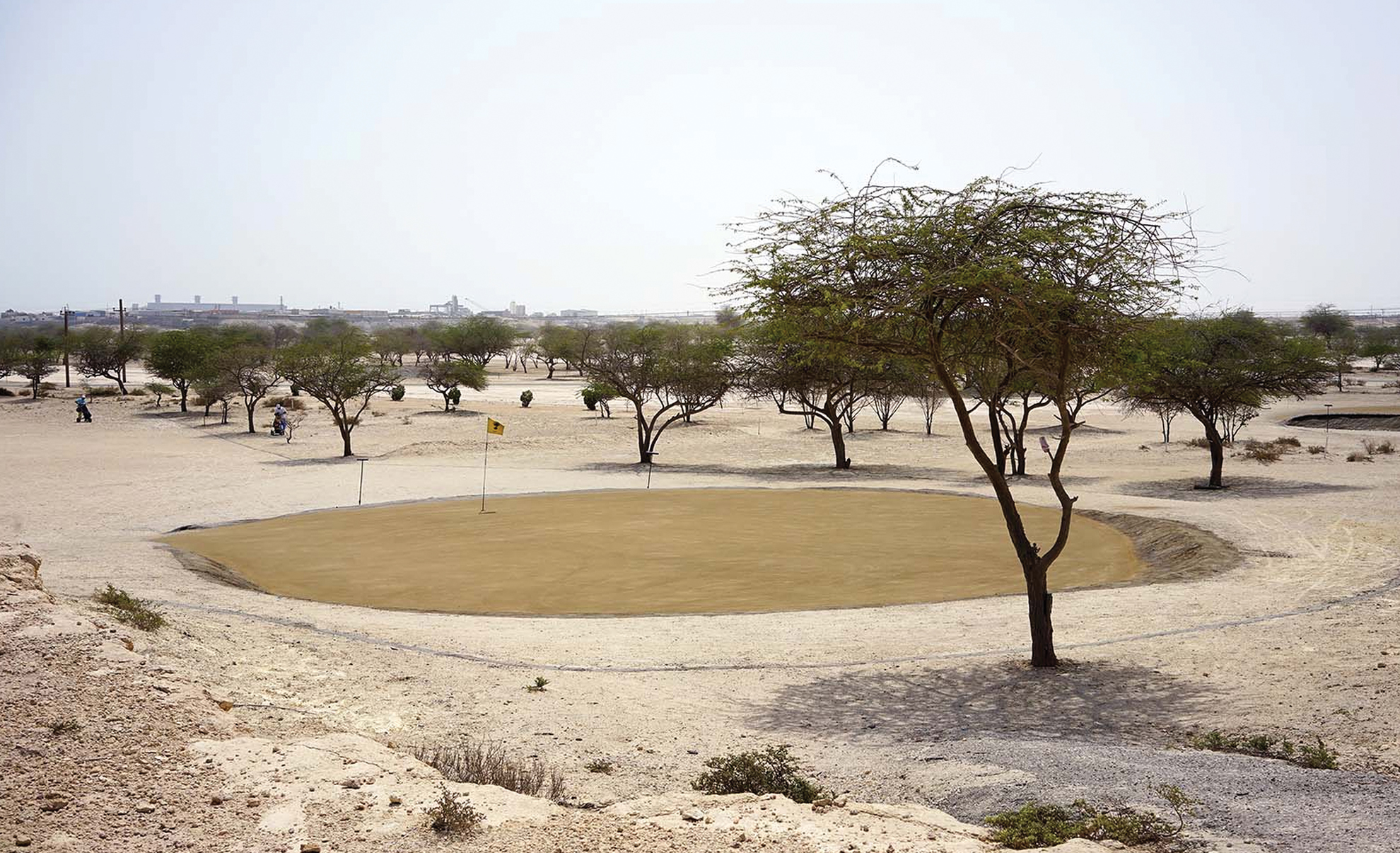
Some of the most successful golf developments around the world have worked out that shorter golf isn’t inferior golf. At Pinehurst, alongside its championship courses, sits The Cradle, a nine-hole course measuring just 789 yards, and nobody thinks Pinehurst isn’t taking golf seriously. Bandon Dunes has its Bandon Preserve; Pebble Beach has The Hay. Sometimes people simply want to hit golf shots, and that philosophy could be powerful in the UAE, where it already has a foothold: the nine-hole, floodlit, multi-tee format Harradine built at Nad Al Sheba was doing this years before “short course” became a buzzword.
Don’t Make the Great Courses Cheaper
The solution isn’t cheaper golf at the UAE’s existing championship venues, which have businesses to operate and are part of the premium image that makes UAE golf attractive internationally. Keep them, celebrate them, fill them with tourists. The opportunity is to build something underneath them: a public facility built around accessibility, with a nine-hole course, multiple tees so a child and an accomplished golfer can play together, a floodlit range, rental clubs, affordable lessons and junior programmes. Golf without the intimidating bits, affordable enough to play every week rather than as an occasional luxury.
The Resident Opportunity
The UAE has another advantage worth remembering: an enormous resident population drawn from countries where golf is established, from Britain and Ireland to South Africa, India, Korea and Japan. Many residents already understand golf; others are golf-curious. The Emirates Golf Federation and UAE clubs have already done considerable work developing juniors and new golfers. Support those initiatives with genuinely accessible facilities and the numbers could get interesting fast.
A family might spend an evening playing six holes rather than visiting a shopping mall. Children could progress from putting to a short course and eventually championship golf. Adults could learn without feeling they’re holding up single-figure golfers behind them. The established clubs would benefit too: today’s AED 100 beginner could become tomorrow’s club member, buying lessons, clubs, a handicap, membership, golf holidays.
Building a Pyramid
Think of it as a pyramid. At the top are the great championship courses, and they should stay there: aspiration, tourism, tournaments, global visibility. Underneath comes club golf, then nine-hole golf, short courses, driving ranges, simulators and junior programmes. Right at the bottom sits the most important level of all: someone hitting a golf ball for the first time. The wider that base gets, the stronger everything above it becomes.
Golf has sometimes tried to grow by starting at the wrong end: showing beginners Rory McIlroy smashing a driver 330 yards, then sending them onto a 7,000-yard course. Give them a wedge and a 90-yard hole instead.
The Next Great UAE Golf Project
The UAE should be proud of what it has built. Few countries have developed a golf industry so quickly or successfully. The DP World Tour has made the Emirates central to its schedule, some of the world’s greatest golfers have competed here, and golf tourism has become part of the country’s winter appeal. None of that needs to change. But successful industries evolve, and the first great challenge for UAE golf, proving championship courses could be built in the desert, has been achieved.
The next challenge is different: persuading more of the people already living here to actually play. Make golf easier to discover, quicker, less intimidating. And somewhere along the way, make the first step affordable.
There’s something fitting about the idea that UAE golf’s future might borrow from its past. Dubai Country Club wasn’t immaculate. Nad Al Sheba wasn’t brutally difficult, and when Peter Harradine was handed the chance to rebuild it, he chose to protect that character rather than chase another 7,000-yard statement course, which is a large part of why golfers still choose to play there today. Neither venue needed to intimidate anyone; they gave people somewhere to fall in love with golf. That’s probably what the UAE needs again: not another course for the world’s best players, since there are already plenty of those, but one built for the world’s worst.